Warning: Trying to access array offset on null in /home/especiais/epsatisep/public_html/2016/EPS2016-wiki2/lib/plugins/caption/syntax/reference.php on line 68
Warning: Undefined array key "fstg" in /home/especiais/epsatisep/public_html/2016/EPS2016-wiki2/lib/plugins/caption/syntax/reference.php on line 68
Warning: Undefined array key "frd" in /home/especiais/epsatisep/public_html/2016/EPS2016-wiki2/lib/plugins/caption/syntax/reference.php on line 68
Warning: Undefined array key "fgd" in /home/especiais/epsatisep/public_html/2016/EPS2016-wiki2/lib/plugins/caption/syntax/reference.php on line 68
Warning: Undefined array key "fed" in /home/especiais/epsatisep/public_html/2016/EPS2016-wiki2/lib/plugins/caption/syntax/reference.php on line 68
Warning: Undefined array key "faeb" in /home/especiais/epsatisep/public_html/2016/EPS2016-wiki2/lib/plugins/caption/syntax/reference.php on line 68
Warning: Undefined array key "fsfr" in /home/especiais/epsatisep/public_html/2016/EPS2016-wiki2/lib/plugins/caption/syntax/reference.php on line 68
Warning: Undefined array key "fssg" in /home/especiais/epsatisep/public_html/2016/EPS2016-wiki2/lib/plugins/caption/syntax/reference.php on line 68
Warning: Undefined array key "fussg" in /home/especiais/epsatisep/public_html/2016/EPS2016-wiki2/lib/plugins/caption/syntax/reference.php on line 68
Warning: Undefined array key "fpc" in /home/especiais/epsatisep/public_html/2016/EPS2016-wiki2/lib/plugins/caption/syntax/reference.php on line 68
Warning: Undefined array key "fsct" in /home/especiais/epsatisep/public_html/2016/EPS2016-wiki2/lib/plugins/caption/syntax/reference.php on line 68
Warning: Undefined array key "fstgd" in /home/especiais/epsatisep/public_html/2016/EPS2016-wiki2/lib/plugins/caption/syntax/reference.php on line 68
Warning: Undefined array key "fnacd" in /home/especiais/epsatisep/public_html/2016/EPS2016-wiki2/lib/plugins/caption/syntax/reference.php on line 68
Warning: Undefined array key "fwbs" in /home/especiais/epsatisep/public_html/2016/EPS2016-wiki2/lib/plugins/caption/syntax/reference.php on line 68
Warning: Undefined array key "fwbs" in /home/especiais/epsatisep/public_html/2016/EPS2016-wiki2/lib/plugins/caption/syntax/reference.php on line 68
Warning: Undefined array key "ftptm" in /home/especiais/epsatisep/public_html/2016/EPS2016-wiki2/lib/plugins/caption/syntax/reference.php on line 68
Warning: Undefined array key "fgcc" in /home/especiais/epsatisep/public_html/2016/EPS2016-wiki2/lib/plugins/caption/syntax/reference.php on line 68
Warning: Undefined array key "listofmaterials" in /home/especiais/epsatisep/public_html/2016/EPS2016-wiki2/lib/plugins/caption/syntax/reference.php on line 68
Warning: Undefined array key "rrr" in /home/especiais/epsatisep/public_html/2016/EPS2016-wiki2/lib/plugins/caption/syntax/reference.php on line 68
Warning: Undefined array key "communicationsreg" in /home/especiais/epsatisep/public_html/2016/EPS2016-wiki2/lib/plugins/caption/syntax/reference.php on line 68
Warning: Undefined array key "riskregister" in /home/especiais/epsatisep/public_html/2016/EPS2016-wiki2/lib/plugins/caption/syntax/reference.php on line 68
Warning: Undefined array key "fsan" in /home/especiais/epsatisep/public_html/2016/EPS2016-wiki2/lib/plugins/caption/syntax/reference.php on line 68
Warning: Undefined array key "stakeholders" in /home/especiais/epsatisep/public_html/2016/EPS2016-wiki2/lib/plugins/caption/syntax/reference.php on line 68
Warning: Undefined array key "fmme" in /home/especiais/epsatisep/public_html/2016/EPS2016-wiki2/lib/plugins/caption/syntax/reference.php on line 68
Warning: Undefined array key "fpef" in /home/especiais/epsatisep/public_html/2016/EPS2016-wiki2/lib/plugins/caption/syntax/reference.php on line 68
Warning: Undefined array key "fmev" in /home/especiais/epsatisep/public_html/2016/EPS2016-wiki2/lib/plugins/caption/syntax/reference.php on line 68
Warning: Undefined array key "fmit" in /home/especiais/epsatisep/public_html/2016/EPS2016-wiki2/lib/plugins/caption/syntax/reference.php on line 68
Warning: Undefined array key "fswot" in /home/especiais/epsatisep/public_html/2016/EPS2016-wiki2/lib/plugins/caption/syntax/reference.php on line 68
Warning: Undefined array key "fsmgl" in /home/especiais/epsatisep/public_html/2016/EPS2016-wiki2/lib/plugins/caption/syntax/reference.php on line 68
Warning: Undefined array key "fmsgc" in /home/especiais/epsatisep/public_html/2016/EPS2016-wiki2/lib/plugins/caption/syntax/reference.php on line 68
Warning: Undefined array key "fmasgm" in /home/especiais/epsatisep/public_html/2016/EPS2016-wiki2/lib/plugins/caption/syntax/reference.php on line 68
Warning: Undefined array key "fpmc" in /home/especiais/epsatisep/public_html/2016/EPS2016-wiki2/lib/plugins/caption/syntax/reference.php on line 68
Warning: Undefined array key "fpma" in /home/especiais/epsatisep/public_html/2016/EPS2016-wiki2/lib/plugins/caption/syntax/reference.php on line 68
Warning: Undefined array key "fmami" in /home/especiais/epsatisep/public_html/2016/EPS2016-wiki2/lib/plugins/caption/syntax/reference.php on line 68
Warning: Undefined array key "faslandome" in /home/especiais/epsatisep/public_html/2016/EPS2016-wiki2/lib/plugins/caption/syntax/reference.php on line 68
Warning: Undefined array key "faslanlogo" in /home/especiais/epsatisep/public_html/2016/EPS2016-wiki2/lib/plugins/caption/syntax/reference.php on line 68
Warning: Undefined array key "fdity" in /home/especiais/epsatisep/public_html/2016/EPS2016-wiki2/lib/plugins/caption/syntax/reference.php on line 68
Warning: Undefined array key "faidamodel" in /home/especiais/epsatisep/public_html/2016/EPS2016-wiki2/lib/plugins/caption/syntax/reference.php on line 68
Warning: Undefined array key "fosnpu" in /home/especiais/epsatisep/public_html/2016/EPS2016-wiki2/lib/plugins/caption/syntax/reference.php on line 68
Warning: Undefined array key "fctti" in /home/especiais/epsatisep/public_html/2016/EPS2016-wiki2/lib/plugins/caption/syntax/reference.php on line 68
Warning: Undefined array key "fttpti" in /home/especiais/epsatisep/public_html/2016/EPS2016-wiki2/lib/plugins/caption/syntax/reference.php on line 68
Warning: Undefined array key "fofidp" in /home/especiais/epsatisep/public_html/2016/EPS2016-wiki2/lib/plugins/caption/syntax/reference.php on line 68
Warning: Undefined array key "ffvotd" in /home/especiais/epsatisep/public_html/2016/EPS2016-wiki2/lib/plugins/caption/syntax/reference.php on line 68
Warning: Undefined array key "fbfi" in /home/especiais/epsatisep/public_html/2016/EPS2016-wiki2/lib/plugins/caption/syntax/reference.php on line 68
Warning: Undefined array key "fbtpd" in /home/especiais/epsatisep/public_html/2016/EPS2016-wiki2/lib/plugins/caption/syntax/reference.php on line 68
Warning: Undefined array key "fbduc" in /home/especiais/epsatisep/public_html/2016/EPS2016-wiki2/lib/plugins/caption/syntax/reference.php on line 68
Warning: Undefined array key "ffstd" in /home/especiais/epsatisep/public_html/2016/EPS2016-wiki2/lib/plugins/caption/syntax/reference.php on line 68
Warning: Undefined array key "flabel124" in /home/especiais/epsatisep/public_html/2016/EPS2016-wiki2/lib/plugins/caption/syntax/reference.php on line 68
Warning: Undefined array key "flabel125" in /home/especiais/epsatisep/public_html/2016/EPS2016-wiki2/lib/plugins/caption/syntax/reference.php on line 68
Warning: Undefined array key "flabel126" in /home/especiais/epsatisep/public_html/2016/EPS2016-wiki2/lib/plugins/caption/syntax/reference.php on line 68
Warning: Undefined array key "flabel134" in /home/especiais/epsatisep/public_html/2016/EPS2016-wiki2/lib/plugins/caption/syntax/reference.php on line 68
Warning: Undefined array key "flabel136" in /home/especiais/epsatisep/public_html/2016/EPS2016-wiki2/lib/plugins/caption/syntax/reference.php on line 68
Warning: Undefined array key "flabel135" in /home/especiais/epsatisep/public_html/2016/EPS2016-wiki2/lib/plugins/caption/syntax/reference.php on line 68
Warning: Undefined array key "flabel1111" in /home/especiais/epsatisep/public_html/2016/EPS2016-wiki2/lib/plugins/caption/syntax/reference.php on line 68
Warning: Undefined array key "flabel1101" in /home/especiais/epsatisep/public_html/2016/EPS2016-wiki2/lib/plugins/caption/syntax/reference.php on line 68
Warning: Undefined array key "flabel1100" in /home/especiais/epsatisep/public_html/2016/EPS2016-wiki2/lib/plugins/caption/syntax/reference.php on line 68
Warning: Undefined array key "fvots" in /home/especiais/epsatisep/public_html/2016/EPS2016-wiki2/lib/plugins/caption/syntax/reference.php on line 68
Warning: Undefined array key "fcd" in /home/especiais/epsatisep/public_html/2016/EPS2016-wiki2/lib/plugins/caption/syntax/reference.php on line 68
Warning: Undefined array key "plywood" in /home/especiais/epsatisep/public_html/2016/EPS2016-wiki2/lib/plugins/caption/syntax/reference.php on line 68
Warning: Undefined array key "woodspecies" in /home/especiais/epsatisep/public_html/2016/EPS2016-wiki2/lib/plugins/caption/syntax/reference.php on line 68
Warning: Undefined array key "osb" in /home/especiais/epsatisep/public_html/2016/EPS2016-wiki2/lib/plugins/caption/syntax/reference.php on line 68
Warning: Undefined array key "panels1" in /home/especiais/epsatisep/public_html/2016/EPS2016-wiki2/lib/plugins/caption/syntax/reference.php on line 68
Warning: Undefined array key "panels2" in /home/especiais/epsatisep/public_html/2016/EPS2016-wiki2/lib/plugins/caption/syntax/reference.php on line 68
Warning: Undefined array key "panels3" in /home/especiais/epsatisep/public_html/2016/EPS2016-wiki2/lib/plugins/caption/syntax/reference.php on line 68
Warning: Undefined array key "foundationwood" in /home/especiais/epsatisep/public_html/2016/EPS2016-wiki2/lib/plugins/caption/syntax/reference.php on line 68
Warning: Undefined array key "arduinounonano" in /home/especiais/epsatisep/public_html/2016/EPS2016-wiki2/lib/plugins/caption/syntax/reference.php on line 68
Warning: Undefined array key "tempsensor" in /home/especiais/epsatisep/public_html/2016/EPS2016-wiki2/lib/plugins/caption/syntax/reference.php on line 68
Warning: Undefined array key "distancesensor" in /home/especiais/epsatisep/public_html/2016/EPS2016-wiki2/lib/plugins/caption/syntax/reference.php on line 68
Warning: Undefined array key "prototype1" in /home/especiais/epsatisep/public_html/2016/EPS2016-wiki2/lib/plugins/caption/syntax/reference.php on line 68
Warning: Undefined array key "prototype2" in /home/especiais/epsatisep/public_html/2016/EPS2016-wiki2/lib/plugins/caption/syntax/reference.php on line 68
Warning: Undefined array key "doorclosed" in /home/especiais/epsatisep/public_html/2016/EPS2016-wiki2/lib/plugins/caption/syntax/reference.php on line 68
Warning: Undefined array key "window1" in /home/especiais/epsatisep/public_html/2016/EPS2016-wiki2/lib/plugins/caption/syntax/reference.php on line 68
Warning: Undefined array key "servowindow" in /home/especiais/epsatisep/public_html/2016/EPS2016-wiki2/lib/plugins/caption/syntax/reference.php on line 68
Warning: Undefined array key "fcb" in /home/especiais/epsatisep/public_html/2016/EPS2016-wiki2/lib/plugins/caption/syntax/reference.php on line 68
Warning: Undefined array key "terrainclass" in /home/especiais/epsatisep/public_html/2016/EPS2016-wiki2/lib/plugins/caption/syntax/reference.php on line 68
Warning: Undefined array key "domeroof" in /home/especiais/epsatisep/public_html/2016/EPS2016-wiki2/lib/plugins/caption/syntax/reference.php on line 68
Warning: Undefined array key "resultpf" in /home/especiais/epsatisep/public_html/2016/EPS2016-wiki2/lib/plugins/caption/syntax/reference.php on line 68
Warning: Undefined array key "powerframe" in /home/especiais/epsatisep/public_html/2016/EPS2016-wiki2/lib/plugins/caption/syntax/reference.php on line 68
Warning: Undefined array key "overallviewwindow" in /home/especiais/epsatisep/public_html/2016/EPS2016-wiki2/lib/plugins/caption/syntax/reference.php on line 68
Warning: Undefined array key "overallviewwindow" in /home/especiais/epsatisep/public_html/2016/EPS2016-wiki2/lib/plugins/caption/syntax/reference.php on line 68
Warning: Undefined array key "woodenblockwindow" in /home/especiais/epsatisep/public_html/2016/EPS2016-wiki2/lib/plugins/caption/syntax/reference.php on line 68
Warning: Undefined array key "openedwindow" in /home/especiais/epsatisep/public_html/2016/EPS2016-wiki2/lib/plugins/caption/syntax/reference.php on line 68
Warning: Undefined array key "doorclosedposition" in /home/especiais/epsatisep/public_html/2016/EPS2016-wiki2/lib/plugins/caption/syntax/reference.php on line 68
Warning: Undefined array key "armsofthedoor" in /home/especiais/epsatisep/public_html/2016/EPS2016-wiki2/lib/plugins/caption/syntax/reference.php on line 68
Warning: Undefined array key "dooropenposition" in /home/especiais/epsatisep/public_html/2016/EPS2016-wiki2/lib/plugins/caption/syntax/reference.php on line 68
Warning: Undefined array key "woodenblockdoor" in /home/especiais/epsatisep/public_html/2016/EPS2016-wiki2/lib/plugins/caption/syntax/reference.php on line 68
Warning: Undefined array key "fullprototype" in /home/especiais/epsatisep/public_html/2016/EPS2016-wiki2/lib/plugins/caption/syntax/reference.php on line 68
Table of Contents
Report
Tile: Wooden Dome Shelter
Author(s):
- Joppe Balbaert
- Jaehyun Park
- Ramon Marimon
- Akos Serfozo
- Marine Cazelles
- Stancel Constantin Domenic
Acknowledgements
The Aslan team wants to thank everyone who contributed to our project and that helped us during the writing of this report.
First of all, we express our gratitude to ISEP to give us the opportunity to do the European Project Semester in Porto and realize a project with other international students. It was a great and unforgettable experience, we all learned a lot from this experience, both on a professional and personal level.
Furthermore, we would like to warmly thank our supervisors: Abel Duarte, Fernando Ferreira, Benedita Malheiro, Cristina Ribeiro, Manuel Silva, Paulo Ferreira and Pedro Guedes who have guided us throughout this semester helping us in any circumstances to solve problems and giving us advice with patience.
Finally, we would like to thank our teachers for sharing their expertise and knowledges everyday that allows us to complete successfully our project.
Glossary
| Abbreviation | Description |
|---|---|
| ACQ | Alkaline Copper Quaternary Compounds |
| AIDA | Awareness / Attention / Interest / Desire / Action |
| B2C | Business to Consumer |
| C2C | Consumer to Consumer |
| CCA | Copper Chrome Arsenate |
| CO2 | Carbon dioxide |
| EPS | European Project Semester |
| EU | European Union |
| ISEP | Instituto Superior de Engenharia do Porto |
| ISO | International Organization for Standardization |
| LOSP | Light organic solvent preservatives |
| LVD | Low Voltage Directive |
| NASA | National Aeronautics and Space Administration |
| NGO | Non-Governmental Organization |
| NSPE | National Society of Professional Engineers |
| OSB | Oriented Strand Board |
| PESTEL | Political, Economic, Social, Technological, Legal, Environmental |
| R&D | Research and Development |
| R&R | Role & Responsibility |
| SMART | Specific/Measurable/Attainable/Relevant/Time based |
| SWOT | Strengths / Weaknesses / Opportunities / Threats |
| USA | United States of America |
| WBS | Work Breakdown Structure |
1. Introduction
1.1 Presentation
We are a team of six international students and we are working together on our European Project Semester at ISEP. We all come from a different country in the world and we all study in a different field of engineering. Our team consists of the following members:
- Joppe Balbaert - Civil Engineering - Belgium
- Stancel Domenic Constantin - Environmental Engineering - Romania
- Jaehyun Park - Chemical Engineering - South-Korea
- Ramon Marimon - Electrical Engineering - Spain
- Marine Cazelles - Packaging Engineering - France
- Akos Serfozo - Electrical Engineering - Hungary
1.2 Motivation
The choice of our project is the result of a common interest in innovation and creativity. Indeed, since the geodesic domes exist, they have proven ingenuity of the concept. A geo-dome has a big volume for a small surface, so its decreased surface area requires less building materials. Furthermore, it allows an optimal air flow and a uniform temperature thanks to its concave interior. Many architects have used it to create various buildings such as concert halls, airports, churches or mosques.
From the 1970s onwards, the enthusiasm for geodesic domes decreased, until recently when a renewed interest in environmental preoccupations allows the return of these spherical structures [1]. Indeed, the excessive cost of energy is forcing individuals and countries to look for ways to minimize their consumption. Energy efficiency is the main reason for the comeback of geodesic domes. Thus, nowadays, the demand for this type of product increases whether it is personal or business applications: greenhouse, storage room, event domes for trade show, convention or party…
In this way, we chose this project that constitutes a challenge for our team. Indeed, succeed in applying modern technological know-how to geo-dome construction can help to make shelter more comfortable and efficient for a greater number of people. Thus, our aim is to develop a stylish geo-dome as sustainable as possible, while respecting the requirements and working as a team.
1.3 Problem
As mention in the previous part, nowaday, people try to minimize their energy consumption, more aware of environmental problems. Indeed, the sources of energy decrease while its cost increases in all parts of the world.
In this way, the Aslan dome could be a solution to these preoccupations. It is designed to be energy efficient and sustainable. Thus, the main priority is to think about the best design and calculations for our dome in order to allow an optimal air flow and uniform temperature inside. We will combine quality and cost efficient materials.
We are aware that during this semester we will have to face different challenges :
- To find a solution to implement an electronic door and window.
- To create a sustainable dome.
- To find the best junction nodes.
- To respect the imposed budget.
- To meet the deadlines.
1.4 Objectives
Our main goal is to design a multifunctional and sustainable wooden dome. The Aslan dome has to be constructed in a way that allows the structure to be permanent with a large interior space and each person can use it as he wants: green house, garden shed, shelter or pergola. Our target will be people concerned by their environmental footprint but also by their well-being and their comfort. Furthermore, we will apply modern technological know-how to the Aslan dome that can help to make shelter more comfortable and efficient for the customers. In this way, we will use temperature and humidity sensors that help to control the conditions inside the dome opening the windows depending on the external weather. It allows to regulate air flow and temperature and to be more energy efficient.
1.5 Requirements
The dome designed in this project needs to have the following requirements:
- The dome needs to have an automatic door.
- The dome needs to have an automatic window.
- The dome structure needs to be able to withstand wind loads specified in Eurocode 1.
The other project requirements are:
- Reuse provided materials,
- Use low cost hardware solutions,
- Not exceed the budget (100 €)
- Comply with the following EU Directives:
- Machine Directive (2006/42/CE 2006-05-17);
- Electromagnetic Compatibility Directive (2004/108/EC 2004 12 15);
- Low Voltage Directive (2014/35/EU 2016-04-20);
- Radio Equipment Directive (2014/53/EU 2014-04-16);
- Restriction of Hazardous Substances (ROHS) in Electrical and Electronic Equipment Directive (2002/95/EC 2003-01-27);
- Mandatory adoption and use of the International System of Units (The NIST International Guide for the use of the International System of Units)
- Use open source software and technologies.
1.6 Functional Tests
The first test that will be executed regarding the dome is a simulation in a calculation program called PowerFrame [2]. In this program the wind load on the structure will be tested. For this test Eurocode 1 of the building rules of the European Union will be used. After the test, the section of the beams will be optimized.
The other functional tests will be executed on the prototype of the automatic window. The first test is the building of the prototype itself. The team will rate different aspects while building the prototype. In this way the weak points of the design of the prototype will be detected. For every weak point, improvements will be formulated.
Once the prototype is build, the second part of the testing can be done. The window will open automatically when the temperature or the humidity will be too high. The measurements will be done by a temperature and humidity sensor. If all of this works well, the second test can be considered as successful. The door should also open automatically. To open the door a push button has to be pushed.
1.7 Project Planning
Figure 1 For the planning of the project, a Gantt chart was used. In chapter 3.2 will be discussed how the Gantt chart was obtained.

1.8 Report Structure
| Task | Description |
|---|---|
| Introduction | Presentation of the team, our motivation, objectives and requirements of the project, the main problems |
| State of the art | Presentation of the different products and technologies existing on the market, their strong points and weaknesses |
| Project Management | Organisation and management of the project including the tasks, responsibilities, cost |
| Marketing Plan | Analysis of the market and marketing strategy |
| Eco-efficiency measures for sustainability | Life cycle analysis and study of the economical, environmental and social impacts of our product |
| Ethical and Deontological Concerns | Reflection about legitimacy and legality aspects of our product |
| Project Development | Progress of our project during the semester (design, tests and results, construction etc.) |
| Conclusions | Final conclusion of our project and the acquired knowledges, discussions about the future possible developments |
2. State of the Art
2.1 Introduction
There is a huge range of possibilities for geodesic domes as the choice of materials or the shape of openings and windows or the general aesthetics. Many applications are possible: bungalow, greenhouse, aviary, house, pergola, garden shed, etc.
In this way, in this chapter, we will describe the existing products and their functions. We wanted to compare the different technologies and techniques presents on the market and define their strong and weak points. We focused mainly on the design, the junction nodes, the materials and the functionality.
We based our research on websites, books, previous projects and experience but also on our own knowledges.
2.2 What is a geo-dome?
A geo-dome is a construction that has the shape of a hemisphere. There are different ways to obtain the shape, but for our project we are going to obtain it by obtained by putting together triangles. In this way, it is possible to construct a round form by putting together only straight beams.
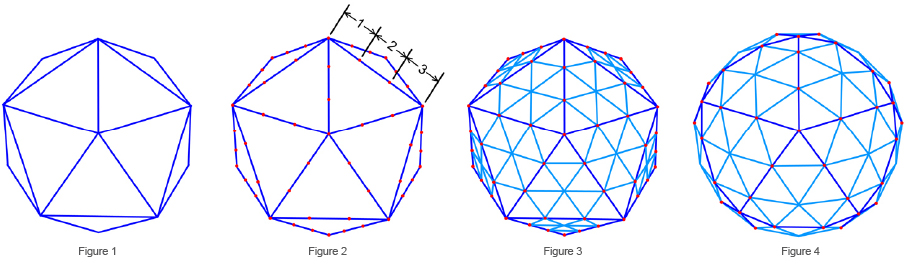
The design of the geo-dome begins with an icosahedron shape. An icosahedron consists out of 20 triangles that all have the same size. In order to get the dome shape, every side of the triangle is divided into a couple of parts. If every side is divided in 2 parts, a V2 dome will be obtained, if divided in 3 parts, a V3 dome is obtained and so on, figure2. Once the triangles are subdivided, they are projected on the hemisphere. To get the final shape of the dome, the vertices of the projected triangles should be connect to each other with straight lines.

The full process of getting a dome starting from a icosahedron will be elaborated further in chapter 7.2.2.1.
2.3 Use of geo-domes
Geo-domes can be used for multiple purposes, which can be seen in Figures 3, 4 and 5. Every purpose will impose other requirements for the dome to fulfil. The more complex the function of the dome, the more difficult it will be to meet the requirements.
Resident domes

To be able to live in the dome, the highest requirements will be imposed. The people living in the dome will request a certain amount of comfort. The level of comfort will depend on the desires of the client. Basic requirements for a resident dome will be the waterproofness of the structure, fire resistance and thermal comfort.
Greenhouse

The requirements for a greenhouse are less strict, because people don’t have to live inside. If there is a small infiltration of water, this won’t be a big problem.
Events

The domes for events are very different in requirements. If the dome is positioned inside it should not be waterproof. Aesthetic aspects are more important, because the dome functions as an eye-catcher. The dome for events should also be easy to assemble and disassemble because it should not stay in the same place for a long time.
2.4 Wooden domes
In this chapter we will discuss different geodesic domes that are already build all over the world. We will mainly focus on the different possibilities for the connections and the type of wood used for the beams and panels.
2.4.1 Dome kits
Dome kits is a company based in the United States of America. They offer multiple solutions for domes, in wood as well in metal. We will only focus on their wooden domes. Dome kits let their clients decide if they want to build the dome themselves or if they want the help of the company as a general constructor. They have already been building domes for 35 years, so they can rely on a lot of experience.
2.4.1.1 Connections
For the connections, dome kits proposes two options. The first option is to make the connection a connector, the second is to do it without one.
Without a connector
For the connection without a connector, the ends of all the beams need to be cut in specific angles. The most visible of the angles is the triangle shape at the end of the beam you can see if you look at the beam from the top. The size of this angle depends on the number of beams coming together in this connection. If 5 beams come together, each angle measures 72°, if 6 beams come together, every angle measures 60°. If you look at the beam from the side, you can also see an angle at the end of the beam. This angle measures 9° and the dome it rounded shape, are shown in Figure 6.

Once the beams are cut at the right angles, they are connected using 76 mm wood screws. Once the screws are drilled into the beams the connections are made. But dome kits still adds an extra connection at the lower parts of the dome. The weight of the higher parts and the loads working on them, should be transferred to the ground trough lower beams. This will cause a higher loading on the lower beams. This load will push outwards on the lower beams. For this reason, dome kits has decided to add extra steel straps on the outside of the connections of the lower beams, like in Figure 7. They have two possible solutions for this. The first one is a simple steel strap screwed onto the beams.

Figure 8 shows the second solution, which is the “Simpson Stronge-tie Gazebo”. This is a prefabricated connector designed for the connection of 6 beams. This connector covers the whole connection. This can be useful if your connection does fit perfectly to assure the waterproofness of the connection. The disadvantage of this connector is that it adds an extra cost to the project. Every connector costs around 10 €.

With a connector
The connection with the use of a connector is almost the same as the connection made on the lower beams when using no connector. An important difference is the preparation of the beams. The beams only have to be cut to one angle instead of two. This will save time during the preparation of the beams. The end of each beam has to be cut at an angle of 9°. This cut is needed because the size of the connector on top is the same as the size at the bottom. This system uses two “Simpson Stronge-tie Gazebo” connectors for every connection, which can be seen in Figure 9. In total this will imply the use of 122 connectors, adding an extra cost of 1220 €.

This type of connection can also be reinforced for the lower parts of the dome. Dome kits does this using simple straight steel straps. The three straps pass through the connection and are connected to the beam at the opposite side. This doesn’t affect the waterproofness of the connection because the connector has a metal plate on top of the connection.

Apart from the extra cost of the connectors, there is another disadvantage. The connectors are designed for hexagonal connections, but there are also 6 pentagonal connections to be made, those can be seen in Figure 11. Dome kits doesn't have a prefabricated connector for this connections. They will adjust a connector for a hexagonal connection to fit the pentagonal connection. This is done by using pliers and a hammer. This will have reduce the advantage you normally have when using connectors, because the angles have to be checked thoroughly.

2.4.1.2 Materials
Dome kits uses multi-layer plywood for all of their panels in wooden domes. The reason they prefer this material over OSB or particle board plywood is the fact that it is has a better moisture resistance. Another reason to choose multi-layer plywood is its better strength.
Dome kits uses Southern Pine lumber for the beams in the wooden domes. This type of wood is widely available in the United States of America where Dome kits is operating from. It is used for the construction of houses. Even though Southern Pine is a softwood, it still has good strength characteristics because it has a high density.
2.4.2 Timberline Geodesics
Timberline geodesics also is an American company that is specialized in construction wooden domes. This company, based in California, lets their client decide whether they want to build the dome themselves. We will discuss their choices on connections and materials, since they are different than those of the dome kits company. Another difference with the standard dome is the structure, this will also be discussed.
2.4.2.1 Connections
Timberline geodesics uses a connector called “Timberline's SteelStar Connector” to make the connections between the different beams. This connector is made out of a 3.5 mm thick plates in hot rolled steel and a steel pipe in the middle. This system can be seen in Figure 12.The advantage of this system is the fact that the angles in both directions are fixed once the connector is finished. This reduces the chances of making mistakes during the construction phase of the dome.

The connector has a breaking resistance of 12 000 lb, which is 53,3 kN. This resistance is four times higher than the resistance needed in the Timberline domes. The beams also touch to the steel pipe. This will reduce the shear force working on the bolts, since the weight is transmitted over the steel ring.
2.4.2.2 Materials
For the panels in the dome, Timberline also uses a plywood as their material of choice. On their website they specify choice as “1/2“ 5-ply Structural Grade #1 plywood”. This means that the plate has a thickness of 12.7 mm and the plate consist out of 5 layers of wood. The #1 structural strength of the panel.
The beams are made out of fir, more specifically Structural Hem fir or Douglas fir. Fir can withstand considerable compressive forces (50 kN/m²). This type of wood also is the resource for making plywood. [14]
2.4.2.3 Structure
Figure 13 shows the general shape of the dome is very similar to that of the standard domes. It consists out of pentagons and hexagons. The difference with the others domes is the fact that Timberline inserts what they call studs in between the beams of the triangles. These studs will increase the stiffness of the triangles. Another advantage is that the span length every panel has to cover will be smaller. This will allow the panels to be thinner and therefore cheaper. But this advantage will be neutralized by the need of extra material for the studs.

2.5 Advantages of geo-domes
In this paragraph, we will discuss the advantages of a geo-dome. It is important to know the advantages of a dome, because they have to be retained during the design process of our own dome.
2.5.1 Big volume, small surface
One of the main advantages of a geo-dome is the fact that a sphere encloses a big volume for the a minimal surface area. This can be seen in the fact that the isoperimetric quotient is 1 for a sphere [16]. The consequence of this is that the geodesic dome can be considered as an efficient shape in terms of use of materials. Another consequence of this characteristic is energy efficiency. The domes loses warmth trough transmission during the winter. This result of this effect is directly related to the surface of the surface area. The bigger the surface area, the bigger the loss of warmth during the colder winter period.
2.5.2 Aerodynamics
Another advantage of the shape of a geo-dome can be found in aerodynamics. Heavy winds on the structure will be guided around the structure. The formula of the force caused by wind contains a drag coefficient. The drag coefficient of a hemisphere 0.42 [17]. When comparing this number to the drag coefficient of a cube, which is 0.8, there can be concluded that the drag coefficient of cube is almost two times bigger. The force acting on a building in the shape of a cube with the same surface, will be twice as high compared to a building with a hemisphere shape. It can be concluded that forces due to wind will have a smaller effect on a hemisphere. Smaller forces acting on the structure, will reduce the cost of materials, because the strength of the beams will have to be lower, which will make the beams less expensive.
2.5.3 Air circulation
Figure 14 show the hemisphere shape of a geo-dome also has an advantage regarding air circulation. When air flows over a curved surface, like that of a geo-dome, its speed will increase. At the apex of the surface, the pressure of the air drops [18]. This phenomenon will generate an air flow through the dome. This air flow will spread the warmth or the cold. This will result in a temperature that is the same in the whole dome. If there is need for heating in the summer or for cooling in the winter, the natural air flow will work as a fan.

2.6 Disadvantages of geo-domes
If the geo-dome would only have advantages, it would be used a lot in the whole world, but it is not. The disadvantages of geo-domes can give an insight on the problems that will appear during the design of the dome. In this way we can pay attention to solve those problems during the design phase.
2.6.1 Complex design
The first big problem with the geo-dome is that it is a complex shape. Contrary to a cube shaped building, it is not so easy to design. The calculations for the strength of the beams, the connections between the beams. etc. are much more complicated and they will take more time. This will increase the price of the building. This extra cost can be reduced by standardization of domes.
2.6.2 Waterproofness
The geo-dome is constructed out of a lot of triangles. To get a good approximation of the hemisphere shape of the dome, the area of each triangles can’t be too big. Like this there will be a lot of seams that can cause problems for the waterproofness of the building. The dimensions of each part of the construct need to be very accurate and every part needs to be placed in an accurate way. To be able to do this, skilled workers and machines with high precision are needed.
2.6.3 Need for custom fitting
Most of the buildings nowadays consist of rectangular shapes. This is the reason why construction materials are mostly available in a rectangular shape. Windows for example are widely available in a rectangular shape, but not in a triangular shape. The size of the windows also isn't free to choose like in a cubic building. For these reasons customization of windows will be needed, which also implies a higher price per window.
The curved walls will also cause problems for the interior decoration of the dome. Standard furniture is rectangular so the user has two options. The first option is to buy custom furniture, which will increase the price. The second option is to use the standard furniture, but that will cause a loss of space close to the walls [20].
2.7 Conclusion
In this chapter we discussed different possibilities for wooden beams regarding materials and connections. This information will help us making the right choices for our own design. We also discussed the advantages and disadvantages geo-domes have. This will help us to find the weak and strong point of geo-domes in order to maintain the strengths of the concept and to try to find a solution for the weaknesses.
3. Project Management
3.1 Scope
3.1.1 Introduction
Scope management includes performing all things which need for finishing project successfully, excludes unneeded work, controls and defines range of deliverables. We use open source software to accomplish our project, select low-cost materials for project by making some materials list.
3.1.2 Product description and Project explanation
We want to make wooden dome shelter which have a variety of purposes, which is used camping place for people or shelter for poor people, like a homeless. This dome is made of eco-friendly and cheap materials and equipped with controller for adjusting humidity and temperature in the dome. Of course, this controller will be able to refresh air from dome outside. Additionally, this controller is automated by arduino and some installation.
3.1.3 WBS (Work Breakdown Structure)
WBS 15 is to divide works in project up to level possible to manage. This diagram is useful for growing up accuracy for deciding timetable and cost as well as making project manager select member and allocate work. The following table is consist of deliverable oriented resulting from activity. The activity is made by tasks. This can be seen in Figure 15

3.2 Time
3.2.1 Introduction
Time management involves activities about controlling and establishing plan to finish the project until deadline.
3.2.2 Time management process
It is composed of serial step like that. When we make Gantt chart, refer to this information, which can be seen in Figure 1.

3.2.3 Gantt chart
The Gantt chart, seen in Figure 16, can design efficiently time for member, set the timetable for preventing waste of time, allocate tasks to member. At the same time, this makes member know the progress of the project.
The projectplanning can also be consulted in Microsoft Project. The mpp file can be found below.
3.3 Cost
3.3.1 Introduction
The purpose of cost management is to estimate production cost needed for performing activities, to decide total budget for project, to control it by using the budget approving only so that project can be completed.
3.3.2 Composition of cost management
The estimation of production cost needs for information like scope, schedule, manpower, risk. And at the step of deciding the budget, by adding up the production cost assigned for each activity, the total budget is made up. At the step of controlling production cost, it renews about cost baseline whenever changed.
3.3.3 Cost analysis
3.3.3.1 Direct Cost
- Materials : We make the list about all required materials to accomplish wooden dome shelter project. And then also consider comparing price and quality of each materials for selecting best materials. This made us choose one in many options. The list of all the materials can be seen in Table 2


- Labor : in real life, we should include labour cost to the budget. But we don’t consider labor cost, since we are students and are work will be payed in points.
- Operating/tools cost : it includes all costs for making the process or energy costs or manufacturing product.
3.3.3.2 Indirect Cost
It is cost which cannot be estimated by any standard Because it is non-realistic, cannot be charged specifically for any object for estimating in directly. it is distinguish 2 type of costs, fixed cost, variable cost. And for example, cleaning services, maintenance, engineering, equipment, buildings, interest (debt), and insurance, etc.
3.4 Quality
3.4.1 Introduction
Quality management includes activity and process deciding for quality goal, policy, responsibilities. It has close relevance to scope of project, is influenced by schedule and production cost. The quality is feature of production or service which meet to needs of clients. Project team should establish suitable quality policy according to the progress of the project. We should do solution about 3 questions for quality assurance. Does our product meet for needs of client? Do we improve to find solution about potential problem of the product? Is the product conducted examination complying with quality standard?
3.4.2 Quality assurance & control
It goes through 4 stages. First, at the time we designed prototype of product, we decided the elements of wooden dome consumers want. Second, when we select materials for product from resource, we should check quality for each material. Additionally, we make a plan to transport, pack, keep it a storage. while wooden dome is made, inspect the quality of product through a variety of tests including sampling. Finally, after completion of product, make a guideline for consumers to minimize error, flaw caused by wrong use. Furthermore, accept feedback about error occurring in the future from them and update the product according to that.
3.5 People
3.5.1 Introduction
Human resource management or People management includes activities and process, which manage ourselves and constitute team for project. It need to be aware in terms of main resource creating project outcome rather than object controlled in person. At develop human resource plan, we assigned team member to task making each member maximize his/her ability to grow up perfection about project.
3.5.2 To build R & R
It means to build the relation between each process & role conducted by team members and responsibilities accordingly. the building of right relation inspires team with motivation and responsibility as well as better systematic performance. Finally, it helps us to manage project well. That's why we made the following matrix about our project. This can be seen in Table 3

- R : Responsible
- A : Approval
- C : Consultant
- I : Informant
- T : Tester
3.6 Communications
3.6.1 Introduction
Communication management involves processing for conducting timely about creation, preservation, distribution for information of project. It must be need for communications with all stakeholders as well as each member.
3.6.2 Communication register
So the one of elements for finishing project successfully is considered for smooth communications among team members. Through the communication interacting and organic between members, it is important to make regular meeting as we can progress project more efficiently. We have brainstorming about agenda given to us to share the idea and update work conducted by each member on the wiki. And then every week we have a meeting with supervisors for taking feedback from them, improving the progress of project. Furthermore, seek a direction for improvement about project by discussing it frequently.
Apart from these meeting, we can contact each supervisor directing respective parts by using outlook in ISEP whenever we want to solve a doubt, ask something about that during the working according to R&R matrix for our project. Externally, we can communicate with potential consumer including client and advertise by using manual and video for product.
Finally, we are operating the Facebook group chat to notice the date changed for meeting as soon as possible, share the output which needs for progress of the project, take action against other alteration. The communication register can be found in Table 4.
| What | Who | How | When | Why | To whom | Codification comments |
|---|---|---|---|---|---|---|
| Meeting with supervisors | Team members | In person | Every Thursday | To discuss the progress of the project | Supervisors | English and explaining in the correct technical terms |
| Team discussion | Team members working on the same thing | In person and via social networks | Multiple times a week | To discuss the development of the project | Team members | In English |
| Agenda | Team members | Via the Wiki page | every Tuesday | To inform about the topics of the meeting | Supervisors | In English and using short but clear language |
| Brainstorm session | Team members | In person | First weeks after receiving the subject | To share ideas | Other team members | Explain ideas using sketch to clarify |
| Visit to supplier | Team members | In person and via mail | Before and during order of the materials | To guarantee a correct delivery | Supplier | Use Portuguese terms to clarify what you need |
| Interim presentation | Team members | Oral presentation with Powerpoint | 21st of March 2016 | To inform the teachers and supervisors about the progress of our project | Supervisors and teachers | Brief and clear explanation in English |
| Manuel | Team members | Written document | 11th of June 2016 | To explain how our prototype works | Client | Use simple non-technical language |
| Video | Team members | Video | 11th of June | To give an impression of our EPS semester | Supervisors, teachers and everybody who is interested | Subtitles to improve the comprehensibility |
3.7 Risk
3.7.1 Introduction
The risk management involves a set of processes : planning management, analysis, contingency plan, monitoring, controlling about project. Risk is an uncertain event or unknown condition. The priority of risk is made up for multiplying two elements : Probability, Impact. there are four Negative strategies : Avoid, Transfer, Mitigate, Accept and four Positive strategies : Exploit, Share, Enhance, Accept. the purpose of this part is prevention rather than reaction doing anything after happening risk problem. that's why we should establish the plan to prevent every predictable risk situations and contingency plan for unpredictable risk situations.
3.7.2 Risk register
This is a document included quality and quantity risk analysis, response result data about risk. Table 5 has some situations for risk and our response for it
| Risk | Description | Cause | Effect | Trigger | Response | Owner | Last review |
|---|---|---|---|---|---|---|---|
| Delay of delivery | Materials for prototype are delivered too late | Order is placed too late or the supplier has no stock | Prototype will not be completed in time (time & cost) | Watching in real time the status of the delivery | Change the supplier | Akos | 14/04 |
| Broken components | Materials breaking during the construction | Poor quality of the components or mishandling | Delay in the completion of the project (time & cost) | When doing a quality test after the delivery or seeing a team member not handle the materials correctly | Ordering spare parts | Ramon | 14/04 |
| Absence of team member | Team member not able to do the work or does not complete the work in time | Illness or bad cooperation | Quality of the work reduced (time) | Team member does not upload any intermediate progress | Other member of the team fills in the gap | Jaehyun | 14/04 |
| Miscalculations | Team member makes wrong calculations | Incapability or inattention during calculation | Dome collapse (time & cost) | Calculation programs giving errors or checking the work after each step | Recalculate correctly and redo the construction | Stancel | 14/04 |
3.8 Procurement
3.8.1 Introduction
Procurement part includes some process which need for buying or obtaining output like a product or service for work of the project from the outside. During the progress of project, We should focus on minimizing delay of procurement for materials and other risks, this is very important to finish the project step by step, to grow up client’s satisfaction. So this part is required to contact with seller regularly.
3.8.2 The process of procurement
- Plan procurements : In this part, the potential seller for procurement should be identified. Also the way to procure materials for project is decided and is made into documentation.
- Conduct procurements : Select each seller for best in the list which has many options.
- Administer procurements : Manage procurements contract between seller and us, conduct change or measure for contract.
- Close procurements : Finish to procure every materials for project, make a specific document about this for later utilization.
3.9 Stakeholders management
3.9.1 Introduction
During the progress of project, stakeholder management is also important part for success of project. Stakeholder is the person influencing team or influenced by team. This plan is consist of 4 steps.
3.9.2 The process for managing stakeholders
To distinguish stakeholder (stakeholder analysis)
We should correctly figure out that they have needs about product and service to produce output according to consumer’s desires. The stakeholder analysis can be found in Figure 17.

- A : Team members
- B : Supervisors
- C : Suppliers
- D : Teacher
- E : Home university
- F : ISEP
To manage stakeholder
This process is strategy for making distinguished stakeholders who have interested matter, needs on the basis of potential influence about success of project engage the project during the project life cycle.
- Stakeholder register : it has information about client or needs they want. It helps us to improve the quality of product. This can be found in Table 6
| Who | Role | Can influence | Is influenced | Expectations | Power | Influence | Stakeholder strategy |
|---|---|---|---|---|---|---|---|
| Team members | Developing the project | The whole project | Develop the project and get a good grade | High | High | Manage closely | |
| Supervisors | Supervise the progress of the project | The project and the team members | By the team members | Receive an interesting project | High | High | Weekly reports and meetings |
| Suppliers | Supply materials | The timing and quality of the building of the prototype | Sell the materials | Low | Low | Inform | |
| Teacher | Give information about different subjects | Team members and project | Receive an interesting project | Low | High | Ask for feedback on the project | |
| Home university | Support student previous knowledge | Students | Student succeed to deliver a good project | Low | Low | Keep informed by sending final result | |
| ISEP | Provide EPS semester equipment | Budget and scope of the project | Receive interesting projects | High | Low | Keep satisfied by delivering good work |
To manage involvement
This part is step for solving the issue from them, satisfying their needs and expectation through communication. We should make them join with project in order to make them feel interested it. Whenever they request many change point, the team makes request document for internal review with it. And then we update management plan, document, etc
Control
We should adjust strategy and plan to make them participate in project, to control them. This part deals with information on the basis of work performance. The report about it is given to them and we make them keep being satisfied by having regular meeting.
3.10 Conclusion
This part : Project management, is useful for designing any project. it includes all of things we should consider and makes us see the overall view about this.
4. Marketing Plan
4.1 Introduction
In this chapter, it presents the marketing plan of team 2. First of all, it start analysing the market situation that involve the company, studying all parts that influence in the project and investigating the principal competitors of the product. When the market study is finish, it continuous analysing the targets of company outfit SWOT analysis. Later, there are the segmentation of market with marketing mix, and for finish, it found the budget with the respective prices that company have for to pull this company forward. For conclude, there is a conclusion of the marketing plan.
4.2 Market Analysis
In the market analysis, the Aslan team takes a look on which is its market positioning, from now on, the firm makes an analysis about the feasible markets to enter with our products. The circumstances of each market are shaped by it is customers and competitors. For this reason, it is very important to know what the customers want and what the competitors offer. Therefore, the target of marketing is influence potential customers and gets an advantage over competitors.
4.2.1 Market Situation
Marketing must look at successful strategies to target your audience and ways to position your product that will generate profit and overall brand awareness. The fundamental basis of this is the knowledge and factors that make up the diverse environment of the digital market place.
The Aslan company is based in Portugal. In this way, the team focuses on this country in the marketing plan and in more general manner, on western and central Europe.
We have done our marketing plan about macro and micro environment, as you can see in figure 18.
This picture describes the different parts of macro and micro analysis.

[21]4.2.2 Macro-Analysis
To refer to macro-environment 19 we can say pestel. To analyse the macro-environment market, we should separate this in five groups:
1. Social 2. Technological 3. Economic 4. Environmental 5. Political & Legal

[22]4.2.2.1 Social
In 2008, for the first time in history, urban population outnumbered rural population [23]. This concentration of people can generate stress and this is only part of the impact that cities have on us [24]. For this reason, we give to people an opportunity to have a private space, where they can relax and pass some days away from the pollution generated by a city. Further, at present, the people tend to give importance to things with nature contact and this is what we are selling, relax time in contact with nature and off the stress of cities.
4.2.2.2 Technological
The technological factors have a crucial role within this project. To sell technologically our product we have to consider two aspects. On the one hand, we have to consider the conditions outside of the dome. Our product has an innovative design since it has not the shape of a traditional house and this is a positive point for us. On the other hand, we have to consider the conditions inside of the dome. We want implement sensors that can control the environment inside of the shelter cooling and heating and depending of this, modify windows open. Relative to the door and windows, these will be automatic, giving to our product a sophistication that differentiates us from the competition.
4.2.2.3 Economic
Right now, it is difficult to find a solid construct that gives the benefits that we are offering, with a cheap price. However, we give an economic solution for those who want to have an intimate space, outside the stress of the cities. On of the objective of our project is build a permanent dome using wood like principal material. Wood is the perfect material for get our target as it is a cheap material and offer the features of strengths that we need.
4.2.2.4 Environmental
Nowadays, one of the most important points for us is the environment. We want to have a eco-friendly image. Our marketing plan is focus the wood dome shelter like an ecological and environmentally friendly solution, thus be able to have the maximum potential users. We are offering a product build with wood, a biodegradable material that creates far less carbon dioxide emissions than competing building products. For this reason it is very important for us have this aspect with the public.
We must highlight that a big part of the dome is built with wood and the wood is the most sustainable building material available. For have a safety dome when this will installed outdoors, the wood has to be treated. Treated wood preserves this against termite attack and fungal decay, lengthening its serviceable life and extending his benefits [25].
4.2.2.5 Political & Legal
In the new market the ethical and political are very related. When we talk about ethics we talk about conscience of society and if we refer to political we refer to laws. Nowadays we must take care with the critical issues that include the ethics and politics. In our case, we have to have a consideration of the data protection and privacy.
- The Data Protection& Privacy: we have an ethic and lawful responsibility to protect the privacy of our customers and all people related with our company.
On the other hand, respect the policy of our country, our product is considered as a conventional house. For this reason, we do not have political regulations that have a negative or positive impact on our product.
4.2.3 Micro Analysis
Figure 20 shows the micro environment analysis refers to the things that company can control. Marketing section has a very important role in this part, because it should to put the product in the best position of the market. Micro marketing includes the control of the following points:
1. Suppliers 2. Intermediaries 3. Customers 4. Publics 5. Workers 6. Competitors

[26]4.2.3.1 Suppliers
It is important have much suppliers as possible for negotiate the price of materials. For the product, the main materials we use are oak wood, metallic connectors and some electronics components. In our case, we can get all these materials of too much providers. This is good for us because they make competition among themselves and these reduce the price of materials.
In the market, we can find two kinds of suppliers: wholesalers and retailers. Our future target is being a big company. We will go to focus with wholesalers because for large orders the price of materials decreases. Considering that retailers can be of great help when would appear some problem with the orders.
4.2.3.2 Intermediaries
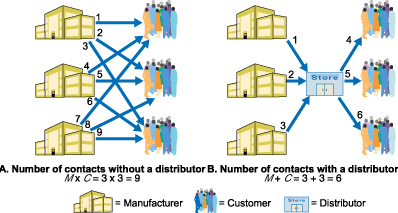
Figure 21 shows the use of intermediaries results from their greater efficiency in making goods available to target markets. It is check that it is more effective for the sales have some distributors. We can see an example on the next picture:

[27]The intermediaries offers to the firm more than it can achieve on its own. It can arrive to the consumers easier. Besides, they can offer some aspects that we don't have: contacts, experience, specialization, scale of operation.
4.2.3.3 Customers
Finally, the most important aspect for us and all companies is the customers. It is our reason for existence, everything we do is around them. For this reason, our company wants involve the customers, using methods and tactics to develop long-term relationship. Marketing plan is not only for attracting the customer for one sale, because if the customer feels well, it will be loyal and for end up spending more in the long-term.
We are working with a special product that mixes the innovation with the traditional. Moreover, to get this product you need some aspects, the most important, space. We are talking about 6.8 meters of diameter, to put the buyers will have to have enough space.
Our product is focused as a living space, from these terms everyone can use it as the way they want. It can be used for a home, a cottage, a storage room, a chill out in the garden, etc. It offer to much possibilities to use.
Other important point is selling the product to small business, for example, to camp sites. We will work in countries where the nature is plenty and where you can find many camp sites.
We separate the customers in two groups: the buyers and the small business.
- The Customers
For sell the wooden dome shelter, we need have solvent customers with enough space for the dome. We must located on a site with these features.
The company is based in Portugal. For the beginning, the firm decides to focused the market especially in Portugal and Spain where the forest area is greater than 30% [28]. Furthermore, the Portugal has the highest rural population rate in Western Europe, which means that nearly a third of Portuguese families live on farms or properties outside urban areas. Then, there are more homes in Portugal than total population (around 10 million people), because half of Portuguese families has second homes, as well as many European who choose to regularly spend their holidays in this country of Southern Europe [29].
- The Small Business
When we talk about small business, we refer to camp sites and something like that. For example, Spain is a country that has an abundant range of campsites. Nowadays, there are around 1200 registered campings [30]. It is a good place for star to implement our business, as it is one of the countries with more volume buyers.
4.2.3.4 Publics
“A public is any group that has an actual or potential interest in or impact on a company’s ability to achieve its objectives.” When we talk about public, we refer to environmentalists, consumer protection groups, media persons, local people, etc. This market sector is very important for the well-being of the company for growth and strengthens. “Companies must put their primary energy into effectively managing their relationships with their customers, distributors and suppliers.” Create a good environment among public, help us to get a distinction positioning verse to competitors. [31]
4.2.3.5 Workers
Have a good relationship with the workers is a very important point if a business wants have a results. The workers are one of the pillars of the company. They have labour unions where protect their interests and improve their working conditions. The trade unions have objectives to achieve, always negotiating with the company. It is important for the company have a stable industrial relation to improve and grows the business. For us will be very important have happy workers for well-being of the company and for have a good positioning verse of market.
4.2.3.5 Competitors
Last but not least the competition. First, it is important to identify competitors and find out about their goals, knowing their potential strengths and weaknesses. We made a classification with our principal competitors and analysing their products, to know better the market where we want enter.
- PACIFIC DOMES
It is one of bigger dome companies found it in the market. Is a United States company and dispose of a big range of products. It works with outstanding companies like: NASA, Toyota, Sony, Pioneer, etc. They sell his products like offering their clients quality assurance and project oversight, with the guarantee of made in USA. The products divides in four groups: event domes, shelter domes, greenhouse domes and playground domes. We analyse the company with two aspects strengths and weaknesses [32].
- Strengths: It is a big business with a good positioning in the market. They have a good marketing plan with a big range of products to supply all customers.
- Weaknesses: Unlike us, they do not offer any wooden dome. This is a good point for us as we offer a more eco-friendly product. A weakness point to consider too is the expensive price of their products, decreasing in great measure their possibilities on the market.
- TIMBERLINE GEODESICS
Timberline Geodesics is an American company that his principal product is wooden dome shelters for houses. They use connectors between the beams. They are in the market for more than 35 years and sell his products like practical and affordable for people to construct their own homes [33].
- Strengths
It is direct competitor for us, they sell a similar product and are focused to market opportunities like us. Offer a robust and permanent product and tries to be affordable for everybody. Maybe, we can follow his steps for break into the market more easily.
- Weaknesses
They are an important company of domes shelter but they do not consider the huge range of possibilities that domes have. They are focus only with wooden domes for live and that closes them many market opportunities.
- DOME KITS
In this case, they have both possibilities of connect the beams, with and without connector. Their products are centred on dome houses and their principal material is wood. They have extended information of domes like: the plans, the materials, the angles of beams and much more [34].
- Strengths
Have a good market approach, for example, without connector they say that you can save 5000 €. They are giving a more economical solution to customers. Have a good web page where you can find all information that you need it about the domes that they sell.
- Weaknesses
It talks about a company with similar aspects with us. Principal weaknesses that it founds when selling their products do not have an easy way to find it and the information about it is very unspecific and poor.
- PACIFIC YURTS
This company is an indirect competitor based in the USA. They sell yurts for a personnal, business or government use. The function of a yurt is similar to the function of a dome. It can be use as a shelter, a guest lodging or an office for example.
- Strengths
Established in 1978, Pacific Yurts has a long experience of the yurts market. They have a good marketing strategy with a good positionning of their products. The company guarantees the quality of their yurt and offers a good customer service. Furthermore, Pacific Yurts has a eco-friendly image taking environmental initiatives as incorporate lumber from sustainable forests certified by SFI (Sustainable Forestry Initiative).
- Weaknesses
The most negative point of this company is the expensive price of their products in comparison with other yurts or domes. Furthermore, customers have to pay for each extras as a dome opener.
4.2 SWOT Analysis
SWOT 22 is an acronym that means: strength, weaknesses, opportunities, and threats. In these terms, SWOT analysis is an organized list of helpful and harmful. Strengths and opportunities are hopeful for the company. Weaknesses and threats are harmful for the company. After this, we classify it as internal or external aspects. Strengths and weaknesses are internal factors. Opportunities and threats are external factors.
When we refer to internal factors, we refer to those things that we can control and model as well as possible. About external factors, are those things that we cannot control related to the customer and competitor market. SWOT analysis is very important for planning process of the company, all the companies should have this control if they want to subsist and grow in the market [35].

[36]
4.3 Strategic Objectives
“If you don't know where you're going, you'll probably end up somewhere else.”
Strategic objectives are one of the fundamental building blocks of a strategic plan. Indeed, to define carefully the strategic objectives is essential; it represents a starting point of a good marketing plan. It allows having a clear view of the ins and outs of the project. The objectives impose criteria that help in decision making and help to choose the best strategies and tactics. Furthermore, strategic objectives allow defining the level of success of the marketing plan and save time and money.
In this way, for our project, we have to define SMART objectives, figure 23. The SMART methodology is very effective to structure its activities and develop concrete and relevant objectives at best [37].

[38]- At the end of 2016 :
- Build the final functional product, ready for sale
- Obtain funding to start production
- Start the publicity campaign
- January 2017 : Product launch
- 2017 :
- Sell at least 5 geodesic domes in Europe
- Build an E-commerce website
- Improve distributor and/or supplier relationships
- Develop and implement a promotional plan to drive increased business
- To 2020 :
- Achieve 5-10% market share in Europe
- Increase revenue by 20% at least
- Improve our service approach for new and existing customers
- Set up a loyalty campaign
- To 2025 : Start to expand sales to the global marketplace
4.4 Segmentation
A market is composed of thousands of people, all different from each other. However, these people have different tastes, motivations and behaviours. Segmentation is a market (or people) dividing method into subsections called segments (or consumer groups) distinct and homogeneous. Market segmentation is the first step in defining and selecting a target market to pursue [39].
An effective segmentation should be at the same time relevant, measurable, accessible and profitable.
The purpose of segmentation is to adapt the products to the needs of individuals. In this way, the Aslan team uses the following specific criteria described in figure24 in order to divide the market in effective segments:
- Geographic
- Demographic
- Psychographic
- Behavioural

[40]
4.4.1 Geographic segmentation
The Aslan company is located in central and western Europe because of the presence of a temperate and Mediterranean forest whose the type of wood is necessary for our dome construction. However, for the beginning, the firm decides to focused the market especially in Portugal and Spain where the forest area is greater than 30%. Furthermore, in Europe, all the countries have a mild climate without extreme conditions allowing the use of the dome during all the year.
Additionally, the installation of the wooden dome needs some space. In this way, the Aslan team chooses to focus the marketing approach on people who live in the country or who have a garden.
4.4.2 Demographic segmentation
The Aslan firm focuses on the population with the following characteristics :
- Age : 30-70 years old
- Life cycle : in couple / married - preferably with children. We choose to target families in priority.
- Income : medium to high
- Type of accommodation & situation : house with garden - preferably owners
- Professional situation : working or retired
4.4.3 Psychographic segmentation
Because the wooden dome could have a lot of uses, it is not possible to draw the exact model of the personality and lifestyle of the typical consumer. But relating to all kinds of functionalities, the team can define some key features.
In this way, the ideal customer, from middle/high class, has a healthy lifestyle in harmony with nature. For example, he grows his own fruits and vegetables, plays sport, has pets or practices some outside activities. He likes to have a rest away from the city, enjoy his family life and the nature that surrounds him.
Aware of the current environmental problems, the client cares about his surrounding and wants to make more environmentally friendly and sustainable purchases. However, he is also preoccupied by his well being and wants a product which can assure his comfort.
4.4.4 Behavioural segmentation
There is no special occasion to buy the product. However, it is a purchase which needs a certain time of thought and the agreement of all the people concerned. Customers only buy once this product. So, the company doesn't work on a loyalty program. Indeed, the usage rate could be important but not the frequency of purchase.
4.4.5 Levels of market segmentation
Each market is broken down into segments and for each level of a market segment, the Aslan company needs different infor mation. In this way, the team has to choose one of the following levels shown in Figure 25 in order to adapt the marketing approach :
- Mass marketing
- Segment marketing
- Niche marketing
- Micromarketing

[41]The product is multifunctional. The firm can sell it in different segments, to different kind of customers without having to adapt. In this way, the team chooses to focus on segment marketing.
4.5 Strategy/Positioning
“Positioning is a marketing concept that outlines what a business should do to market its product or service to its customers.” [42]
The main goal of the positioning is to create an image for the product in order to allow customers to situate it in the world of brands and distinguish it from others. Indeed, having a decisive and clear place in the mind of the target consumer give a important advantage. However, this competitive advantage exists only when the differentiation from the competition is creative, realistic and profitable.
To position the product, the Aslan company has to find a balance between 3 elements: the needs of customers, the image conveyed by competitors and the product (image, characteristics. etc.) while identifying possible competitive advantages and choosing the right one.
- Consumers needs
Nowadays, people are attracted by comfort and safety. The product is designed with the aim of reassuring customers. The Aslan firm provides a professional building which allows avoiding mistakes during the construction and an automatic access to the dome. Indeed, the wooden dome could attract some consumers by its technological aspect. It allows having automatic door and windows and simplifies the life.
Furthermore, the product targets consumers with environmental concerns. Like this, they can be interested by a dome made mainly with wood and glass which guarantees durability and sustainability.
- Competitors image
The business has two typical competitors. The first one provides mainly event domes with a metallic structure and plastic cover at high price as Pacific Dome quoted above. Like this, he has a professional image and works with famous firms. Indeed, due to its high price, this kind of product is more destined for companies: it's a B2B (Business-to-Business) marketing approach. Furthermore, their domes are made without sustainable materials. The second one is more specialized in kit domes for greenhouse or shelter domes made with wood and plastic at a lower price. He targets normal consumers. The Figure 26 shows the perceptual maps of Aslan's competitors.

- Product (that part will be described in more detail in the following chapter: “4.6.1 Product”)
The team wants to provide a well-designed dome, aesthetic, made with sustainable materials at a competitive price. Develop with technological elements, the wooden dome has automatic door and windows. Furthermore, the company features the high quality of the product, designed for a long-life and eco-friendly use.
4.5.1 Conclusion
After analysing these different aspects, the team highlights some important points shown in the figure 27. Firstly, to differentiate the product from the competitors, the company can focused on a B2C (Business to Consumer) marketing. The wooden dome is made mainly with sustainable materials and with automatic functions which represents a competitive advantage on the competitors. None of them offer this type of technology combined with an eco-friendly design. Furthermore, the Aslan company offers a professional building, which can differentiate the firm from the other companies specialized in B2C marketing.

4.6 Adapted Marketing-Mix
Putting the right product in the right place, at the right price, at the right time.
The marketing mix is a business tool in marketing. Also known as the 4P of marketing described in figure28, this strategy includes four variables that play in the overall approach to marketing:
- Product
- Price
- Place (or distribution)
- Promotion

[43]The goal is to make decisions that centre the 4 P on the customers in the target market in order to create value and generate a positive response. Some economists and marketers have made changes to this 4 P theory. Today, we talk about the 5 P adding the notion of People (Human Resources Management and optimization). Some even mention the 7 P with the notions of Process (sales and service) and Physical evidence (Merchandising).
4.6.1 Product
A product is defined as “a tangible good or an intangible service that is seem to meet a specific customer need or demand.” [44] In this way, the Aslan team must ensure to have the right type of product that is in demand for our market. For this, the company has to determine all the characteristics of the product : design, technology, convenience, value, quality, branding or accessories.
First of all, the firm designed the product in an eco-friendly and innovative policy. During all the proceedings, the Aslan team kept in mind the initial objectives. The company wants a high quality dome at a reasonable price, designed to respect the environment, convenient for customers.
Trying to meet the customers' needs, it became clear that family consumers wished for comfort, eco-friendly and technological product. That is why, the company wants to sell the dome as a smart alternative habitat with a small footprint where families can enjoy the proximity and the calm of the nature. Multifunctionnal, this product could be use as an alternative living environment, a guest lodging, a personnal studio for art, stargazing, meditation, fitness, a spa enclosure or a playroom for children for example. Thus, the team will built this dome in such a way as to protect the inside from bad weather conditions : it withstand strong wind or snow conditions. However, the dome has to provide enough light and visibility on the outside which is made possible by the high number of windows. The Aslan company designed the dome as an high-tech item with humidity and temperature sensors that control the windows and an automatic door. The geodesic shape is study to maintain an uniform temperature and an optimal air flow inside even in warm, still weather conditions. Furthermore, the product is mainly made with sustainable and recyclable materials. The brand encourages a more reasonable and green consumption. It is with this objective that the team appeals to local providers for the components. Then, to differentiate from the competitors, the Aslan firm doesn't sell only the dome as a kit item; the team also sells services. Indeed, the dome is built at customer's house. The firm provides a professional construction plus a quality after-sales service if the consumer is not satisfied by the product performance.
Finally, with the aim to be easy to remember and mark the minds of consumers, the team chooses to call its product: the “Aslan dome”, figure29. It is easily pronounceable in a lot of countries and remind customers of the company's name, figure30.


4.6.2 Price
Martin explains in his article about marketing mix that “price covers the actual amount the end user is expected to pay for a product. How a product is priced will directly affect how it sells.” [45]
Indeed, an effective pricing strategy has to take into account the product’s perceived and actual values. If the price is too high, it will make the costs outweigh the benefits in customers eyes, and they will therefore value their money over the product. On the contrary, if the price is to low in comparison to the competitors, consumers will think that the product is an inferior good with poor quality. In conclusion, prices help determine the perception of the product in customers eyes.
The dome is deliver with a professional building and technological elements. In this way, the Aslan company can't sell this product at the same price as a kit dome. The product perceived and actual values would not be in harmony. Quality is measured by various factors, with price being a measure used by many consumers. The client could think that our dome is of poor quality. The team doesn't play in this category. The Aslan firm wishes to appear as a high-quality and green brand. Putting a low price would mean destroy this image in the customers eyes. So, the business chooses to enter the market following a price-skimming strategy.
The concept of this strategy is to set an high but reasonable price for the new product. The objective is to obtain maximum revenue from the market before competition begins to appear. Like that, the Aslan company will be able to reimburse the first spending for production, to extend the range of products and to finance the R&D department. With time, prices could be estimated according to customers' demand, the type of use of the product or competitors pricing strategy. The firm has to be flexible and follows needs and wishes of the public.
Costs of delivery and construction are included in the price given to the customer. The payment policy involves that the client pay before delivery. The company accepts debit card, cheque and cash.
4.6.3 Place
The Aslan firm has to position and distribute the product in a place that is accessible to potential buyers. Distribution is a key element of placement. The placement strategy will help assess what channel is the most suited to a product.
In the Figure 31, we can noticed that there are basically two types of distribution approach : direct or indirect. Either, the company organizes and manages the distribution channel itself or the Aslan team decides to entrust this task to intermediaries.

[46]Given that the Aslan business provides a professional building, the team chooses a direct distribution channel. Customers can buy the product directly on the website or in some exposition shops. At the beginning, it can be more expensive to start running and require a significant investment: trucks, warehouses, logistics systems… However, once in place, a direct channel is shorter and so less costly than an indirect channel. Furthermore, it can allow a direct communication with the customer and a more effective control on all the distribution. Obviously, the Aslan firm will not be able to sell our product widely. However, at the beginning, the team prefers favour the relationship with the consumer. Furthermore, even if it is more difficult to manage, a direct distribution channel avoids disagreements and divergence of interest with external partners.
4.6.4 Promotion
Promotion is a very important component of marketing as it can boost brand recognition and sales. The marketing communication strategies and techniques include advertising, public relations, sales promotion and special offers. The marketers base their communication strategy on a model called AIDA, Figure 32 :
- Attention
- Interest
- Desire
- Action

[47]These are the four basic principles we need to take into account in order to encourage customers to buy the product. The Aslan company has to start by grabbing their attention, and getting them engaged, curious, or excited enough to keep reading. Then the firm builds their interest in what it has to offer and create a desire. Finally, the team has to persuade them to take action.
To promote the product, the company will base our promotion on the actual lifestyle of our target market. The team focuses on the 30-70 years aged people. Nowadays, people of any age are increasingly present on the internet and use social networking platform to communicate as presented in the following figure 33.

[48]In this way, the Aslan firm decides to base the first promotional approach on Internet. Facebook is one of the most famous and used social network. In order to catch customers' attention, the team has plans to create a Facebook group with a description of the product as well as a website to allow the most curious potential consumers obtaining more information about the dome and the brand. For a closer contact with the target market, the company will focus on direct mailing. Then, the Aslan team can increase the on-line promotional activities with advertisement and a mobile application. Furthermore, some people are not receptive to on-line publicity. Thus, in such a way as to convince them too, the company opts for more classic methods. For example, the team focuses on its eco-friendly image and an article in a newspaper could help it to make known the brand and promote the product. Thanks to leaflets and posters distribute in right place, the Aslan business can enough attract potential customers to make them want to have a look on the website. Then, to show them the quality and the performance of the product, the firm can participate to trade fairs such as the one taking place in Lisbon in Portugal: “TEKTÓNICA”. Finally, the Aslan company can attract potential customers with special offers.
4.7 Budget
According to the promotional strategy, the Aslan company will use different approaches. However, some will cost more money than other. The team has to distribute correctly our marketing budget and think about what type of strategies could have the most important impact.
In order to make known the brand and promote the product, the firm will use the following means and prices :
4.7.1 Online marketing
- Facebook group: 0 €
- Website: at the beginning, the company will start with a showcase site designed with an on-line software to promote our product. Later, it can invest in a website designed by a freelancer and if the company is enough profitable, the Aslan team can build an e-commerce site.
| Showcase site | E-commerce site | |
|---|---|---|
| Online software (Monthly rental website) | 0 € - 30 € / month | 10 € - 100 € / month |
| Freelancer (web developer + web designer) | 500 € - 3000 € | 1000 € - 20 000 € |
4.7.2 Print advertisement
- Leaflets:
| Size | A5 (148 mm * 210 mm) |
| Paper type | 250 g - 350 g / gloss |
| Printing | Double sided printing - Colours |
| Quantity | 7 000 |
| Leaflets price | 150 € |
| Transport price | 20 € |
| Total price | 170 € |
- Posters:
| Size | A1 (594 mm * 841 mm) |
| Paper type | 180 g / gloss |
| Printing | One sided printing - Colours |
| Quantity | 5 |
| Leaflets price | 100 € |
| Transport price | 20 € |
| Total price | 120 € |
- Advertisement in newspaper: 300 €
4.7.3 Others
- Trade fairs: 500 €
- Travels (flight, hotel, restaurant): 1000 €
- Special offers : 500 €
4.8 Strategy Control
There is no planning without control.
To maximize the return on the marketing plan, the Aslan company needs to put controls in place to monitor the plan's progress. Controls help to analyse the situation and determine if the actual plan's performances are in agreement with the initial expectations. Any changes that need to be made are done based on the analysis of the performance measurement indicators that the team decides beforehand.
In order to evaluate the current marketing strategies to identify needed adjustments and set guidelines for the future, the Aslan firm bases the strategy control on four major analysis :
- Customer feedback
- Target customer analysis
- Market share analysis
- Budgeting
4.8.1 Customer feedback
The customer is the focus of the marketing policy. In this way, the company has to evaluate his opinions, his degree of satisfaction in connection with our product. In order to reach consumers, the firm can invite them to complete a survey, answer to on-line polls on the Internet, offer opinions through a suggestion box or respond to interviews in person or by phone after they've purchased the product. The results of the research could influence the marketing plan.
4.8.2 Target customer analysis
During the building of the marketing plan, the Aslan team chooses to focus on a determined market with its determined customers : it identified a target customer base. Thus, the firm has to study if it correctly target the right type of consumer. In order to check if the offer matchs with the target customer, the company has to analyse the percentage of sales measuring units sold, revenue generated or profit amount and to identify the typical buyer profile thanks to customer feedback and market survey.
4.8.3 Market share analysis
Market share is the percentage of consumer sales dominated by the Aslan's product. According to the strategic objective forecast, the team should have 5-10% market share in 2020. To control the evolution of it, the company has to analyse the competitors sales, the new products launched on the market and compare the results with its data.
4.8.4 Budgeting
A marketing budget is a balance between the cost of generating the advertising materials and the revenue created by the marketing plan. Thus, the Aslan company has to look at the current costs involved with all aspects of the business and compare the numbers with the expected budget in order to identify the unexpected additional costs. By examining expenses, minimizing spending and maximizing profitability, the team could be able to maintain the budget.
4.9 Conclusion
The Aslan company established the marketing plan considering the actual environment such as the economic and cultural factors. Thus, the team defined the strategy according to the lifestyle of the target market.
After a market analysis, the firm drew the portrait of the typical customer: he is between 30 and 70 years old, has a family and a house with garden and he is aware of environment problems. Furthermore, the Aslan company chose to opt for a price-skimming strategy to enter on the market of B2C (Business to Consumer). It sells a sustainable and technological product with high quality distribute by direct channel.
The Aslan team chooses to be as close as possible to its customers and to establish with them relationships of sharing and trust.
5. Eco-efficiency Measures for Sustainability
5.1 Introduction
As a definition, a “green” building is any project involving construction or renovation made with special attention in terms of minimizing the impact on the design and / or construction and renovation operations might have on the environment. With these features in mind, it should be considered the following: increased energy efficiency , choice of materials that minimizes or eliminates toxic releases, reuse of existing materials, providing natural lighting and indoor air quality, flexible interior space and so on.
5.2 Environmental
The construction of a “green” building is a concept of ecological construction, which values (recovers) natural materials (wood, stone, bamboo, clay, straw, reeds, etc.) or non-toxic, renewable or recycled materials(metal, wood panels, used tires).
An ecological house must have a certain orientation to the sun which in return is ensuring some heat through a significant part of the house, and also, to imitate a natural ecosystem, in which all the components are in connection. In terms of the basic material from which houses can be built, we can talk about geodesic wooden domes (easy to install and maintain, with multilayered wooden panels glued with non-toxic additives, with the shape of a soccer ball cut in half, warm, durable, unique in appearance and does not require conventional concrete foundation).
Wood is a good insulator and it is also soundproof, so it can be insulated rather cheap. Thus, homes are warm in winter and cool in the summer and is recommended for crowded areas of major cities, as it ensures peace and comfort of owners, especially since the wood maintains optimal humidity inside the house, regardless of the weather outside. Wood ventilates the property and achieves a healthy and intimate environment.
Solid wood logs have the ability to absorb heat and release it when the temperature drops inside, helping to regulate the temperature in the house and reducing energy consumption. Solid wood houses are healthy because they ”breathe”.
5.3 Economical
In the category of eco-houses there are included passive houses - without energy consumption - and the ones that have the lowest consumption of heat. This system eliminates the heating costs in winter and cooling in summer, that are reduced by 50-58%. Energy is saved by insulating, heating and running water. The pipes can be buried in the polystyrene interior walls or placed in special channel system.
Wood is a sustainable material not by strength, but by the fact that it is a renewable resource. Wooden houses are environmentally friendly because they help saving resources. Wooden houses have the same properties for a generation, as well as other solutions, but at much lower prices.
Essentially, buildings made of wood have a multitude of advantages, starting from low costs, short implementation period compared with conventional construction systems and continue with increased thermal efficiency and noise.
The construction of these houses need to adapt to the latest requirements in terms of efficiency and energy conservation. Thus, ecological housing consumes 25% less resources than normal and have a lower negative impact on the environment. They are usually made of conventional materials and designed to use resources efficiently electricity, water etc.
5.4 Social
Our objective is to protect the forests and we do that by focusing on forestry products. Forests are the most important natural regenerating capital for human society that continuously produces goods indispensable for man, but it also provides environmental services,maintaining composition and purity of the atmosphere, improving climate, flow control of the hydrographic network, soil formation and conservation.
But it is necessary to realize that forestry is a particularly complex subject to approach both scientifically and practically , assuming an extremely diverse range of goods and services provided by forest. As a consequence of the evolution of society and the requirements which it has from the woods, forestry evolved continuously. In the last century it has been a highly accelerated dynamic change beyond the development cycle of the forest. Forest management objectives change over time, because there are new requirements from society and new knowledge on the components of the forest ecosystem. Fundamental principles of forest management have appeared due to two processes:
- overexploitation of forest resources;
- more detailed knowledge of how forest ecosystems are structured.
Forest management development formed some general principles that constitute the present basis in this branch of production:
- Principle of continuity. According to this principle the forest must be organized and managed in such a way that it has to ensure a constant or increasing production of wood and other goods every year while simultaneously exercise and optimize the basic functions and to ensure the preservation of life.
- Principle of grounding ecological forestry. According to this principle cultivation of the forest must differentiate from management measures based on natural realities. Deviations from this principle, as a result of insufficient knowledge or a series of economic and political theories , have only managed to prove that on a large scale that the fundamental forestry is the only possible alternative.
- Principle of multi functionality. According to this principle, farm forestry must organize and manage the forest so that it optimally and simultaneously fulfils all the useful functions for society. The goal of multifunctional forestry is to efficiently use all tangible and intangible resources the forest provides.
- Principle of selectivity. The principle of selective nature of forestry work is based on making phenotypic selection (is based on how the tree looks ) with systematic character (i.e., interventions are repeated at different intervals of time), in the afforestation domain of work, treatment work and regeneration cuttings.
- Principle of stability. Repeated regeneration of cultivated forests leads to a lower stability over time, the differences from one area to another, from one historical period to another, take a toll because of abiotic, biotic and natural factors. The stability issues of the ecosystems has been much discussed in theory but it can not be solved by specific foresting methods.
5.5 Life Cycle Analysis
Product life cycle refers to the average lifespan of a product: an analogy with (how products are born, grow, mature and then get older); depending on the period of life in which the product, and it’s sales are influenced.
The entire product life-cycle management, from design and development to disappearance from the trade arena, includes the following phases: raw material acquisition, manufacturing, packaging, distribution, use, recycling and product recall from the market.
- A definition of life-cycle is describing in detail all the phases of the “life” of the product, as follows: “the life cycle includes phases: conceptualization, development of project ideas, study engineering, process planning, manufacturing, operation, maintenance (repair) and withdrawal”. The general definition of the life cycle of the product is made in SR EN ISO 14040: 2002.
- The following form of the life cycle analysis is “consecutive steps and interrelated steps of a system-product, from raw material acquisition or generation of natural resources to post-use. The life cycle the product could consist of phases: 1) concept / vision; 2) feasibility; 3) design / development; 4) production; 5) gradual withdrawal from service.
- The stages of the product life-cycle are: conception, design, implementation, service. If this term is used as a marketing concept, the life cycle is “market-oriented”, it refers to the commercial life of the product (product life market) and describes the development trend of turnover and profit a product throughout its commercial life.
- Product life-cycle reflects the time and the evolution of the sales volume of the product and it’s elapsed time from when the product released on the market and the disappearance of the product.
Typical life cycle phases of products subject to marketing are:
- placing on the market (or launch);
- growth;
- maturity;
- saturation;
- decline;
The introduction (launch) is the period of slight increase in sales as the product is released. During this period the product cost is high, competition is conducted based on the performance and characteristics of the product. Due to market uncertainty, appropriate manufacturing strategy must be based on competitive criteria flexibility to cope with frequent changes in product construction.
Massive growth is between acceptance by the market of the product and the growing profits. Product prices may be lower than in the first period, competition takes place primarily on the basis of product quality.
Maturity is the period of slowdown in sales, sales intensity is maintained around a value that depends on the balance between supply and demand.The main concerns are to reduce production costs and increase productivity. Competition becomes most aggressive based on the price of the product.
Saturation is the period in which the product, although it reached the highest rate of acceptance by most buyers, can not be sold on the market as before, because of the emergence of other superior products. Sales growth is slow or they cease. The decline is the period in which sales and profits decline in a rapid pace. Prices are lower, production is in overcapacity and there is a risk that in the end that the product is taken out of production because sales may reach zero or lower .
The graph of variation in the volume of sales of the product over time has the form of well-known curves “in S”. Normally, the curve “in S” shows an increase relatively slow at first and after a considerable period, it is rapidly “departing”. After this climb, the sudden growth slows down, the curve flattens and then it slowly decreases, corresponding with the final phase of decline.However, not all products have evolved sales volume curve “in S”. Some products are marketed to “fall” faster, (Kotler, op. cit., p.638). Such a life cycle where sales cycle stationed at maturity is called “hearth”.
Sales parking is explained, as a rule, in that there is a better alternative available. The plateau tilts slightly upward if sales are growing at a rate consistent with the economic growth. Sometimes the products that reached the stage of decline can be restored in the growth phase through a promotional campaign or repositioning.
5.6 Conclusion
Geodesic wooden domes offer a highly energy efficient housing due to their shape and highly resistant to natural disasters, storms and devastating earthquakes. But perhaps the most attractive quality of the dome shelter is the low cost of construction compared to an ordinary house on the same floor area.
Considering that fuel resources of the planet would last for only 3-4 generations, and this takes a disastrous effect on the climate, at the moment it is necessary to take measures to switch to renewable resources.
In addition, given that the European Union imposed that by 2020 CO2 emissions and energy consumption drop substantially and the increasing energy consumption to come from renewable sources, these measures are not only necessary, but mandatory .
In our project we are designing a sustainable building, so we are taking into account a number of factors such as orientation, geometric conformation, quality of materials and technologies used, making sure that they result with an impact as low as possible on the environment, while providing optimum comfort conditions and long term durability.
6. Ethical and Deontological Concerns
6.1 Introduction
Ethics are the rules you have to follow to live a morally correct life. This is a rather general concept, so it is difficult to implement in our project. Deontology is more suited to implement in our project. Deontology is the ethics of a profession. Every profession has its own deontology, in this project engineering ethics are discussed.
This chapter handles with some ethical and deontological concerns about our project. During the development process of the project and during our professional career, we will inevitably face some ethical problems. The ethical and deontological concerns have been divided in multiple categories: engineering ethics, sales and marketing ethics, academic ethics, environmental ethics and liability. We have to consider every of these topics in order to deliver a project that fulfils the expectations on the ethical level.
6.2 Engineering Ethics
Engineers have an important responsibility in the development of a product. They can influence a lot of different aspects during the design of the project. During this period, they have to act in an ethical way. This is a difficult task, because engineers are not specialized in ethics. For this reason, all engineering organisations have their own code of ethics. This code can help the engineers to make decisions and act in and ethically correct way. In this part of the report, we will discuss the code of ethics of the National Society of Professional Engineers (NSPE). This code of ethics will be useful to make decisions during our project.
The code of ethics of the NSPE has 6 fundamental canons [49]. We will discuss each of them.
Hold paramount the safety, health, and welfare of the public.
This first canon maybe is the most important. In the design and construction of the dome, safety will be the first concern. To guaranty the safety of the structure, we did simulations in a computer program to check if the beams and connections could withstand the forces acting on it. The results of this test should be successful before we continued the process of the construction of the dome. Another measure to ensure the safety is to follow the Eurocode design guidelines. This set of rules can be used to calculate the needed strength for the construction.
To ensure the health and welfare of the public, we made sure that all the materials we used in the dome are not harmful to humans or the environment.
Perform services only in areas of their competence.
This second canon of the code of ethics will be more difficult to follow. The EPS project we are working on is a multidisciplinary project. All of the team members have a different background. The project we are working on has aspects in which one or two team members are specialized. But sometimes we work together with the whole team on one aspect of the project, even though we don’t know much about it. To guarantee the quality of the work, we listen to the person with the most experience in this subject if we have different opinions. We also can go to the supervisors in case of doubt. They all have a different background as well, so they always have an expert amongst them.
Issue public statements only in an objective and truthful manner.
Public statements are the most powerful tool for the team to express their ideas. This is why we have to be careful what we say. If we give wrong or unclear information, this can harm our project. Even though we develop this project as if we want to sell it, we still have to be truthful in our communication, even if this would decrease the possibility of sales.
Act for each employer or client as faithful agents or trustees.
This fourth canon is less important for our project. In this project, our employers are ISEP and the supervisors. We can be faithful to them by working hard on the project. If a company would be interested in our project and they want to support us financially, we would have to discuss this with the supervisors. If we act like this the quality of the work won’t be influenced.
Avoid deceptive acts.
This canon is related to the first one. If we pay attention to the safety of the project, we won’t commit any deceptive acts. The risk of deceptive acts is rather small in our project, because it is mainly a theoretical project.
Conduct themselves honourably, responsibly, ethically, and lawfully so as to enhance the honour, reputation, and usefulness of the profession.
The last canon is more vaguely described. If we respect all of the previous canons, we will satisfy this last canon as well. If we follow all the rules, we won’t harm the honour, reputation and usefulness of the profession of engineer.
6.3 Sales and Marketing Ethics
Nowadays, the market presents a clash of interest between the various players. Customers want to have a product with a good quality at the lowest price and companies would like to increase their profit as much as possible. Like this, a certain code of conduct, policies and practices called ethics are required to manage markets and marketing.
Marketing is one business function that interacts the most with markets. It is therefore not surprising to notice malpractices such as hoarding, price competitions, brand wars and use of unfair tactics. In such a way as to avoid this type of dishonesties with our customers, suppliers or competitors, we imposed an ethical conduct.
Customers do not want to feel manipulated by the brands they like. So, it is important for us to earn the client trust. We want to use ethical marketing as a way to develop a long-term relation with our customers and for this; we need to be transparent and understandable. The trust is based on honesty and an obvious commitment. We strive to offer a high quality product with fair prices. Therefore, it is also essential to have a good image: trust follows reputation. Thereby, we will not take advantage of dishonest advertising. We will only use this tool of communication to inform clearly and attract our potential customers without talking about the competitor's products in a negative way. Additionally, we will guarantee our clientèle that our product is safe and all the necessary tests were done. Our credibility depends on our professional reputation and the performance of our product.
6.4 Academic Ethics
Academic integrity/ethics is the moral code or ethical policy of academia. This includes values such as avoidance of cheating or plagiarism, maintenance of academic standards, honesty and rigor in research and academic publishing.
Plagiarism:
Plagiarism is the appropriation of another person’s ideas, processes, results, or words without giving appropriate credit, including those obtained through confidential review of others’ research proposals and manuscripts.
Cheating:
Disseminating or receiving answers, data, or other information by any means other than those expressly permitted by the instructor as part of any academic exercise [50].
Nowadays when we have to create a product, we don't need or we can not work only with own ideas, because probably somebody found out a good solution for the problem. In this case we can use an already existing idea or product, but with terms and not as our own idea. For example if we want to use a Microsoft Office program we have to buy the licence, but we can use open source programs for free. Academic ethics leads us how we can use other's inventions in a legal way.
6.5 Environmental Ethics
It is obvious that environmental issues become serious quickly, day after day, and that human beings are directly affected by these problems. The world is most congested, polluted, urbanized and more stressed than ever from different points of view, but there are many encouraging signs, such as conducting numerous campaigns for public awareness, business organizations and environmental conservation
Environmental NGOs, which receive more and more members,and “Environmental policies” are part of almost all programs of political parties, they all seem to indicate that people become aware of the importance of nature and hence their responsibilities to the environment.
However, environmental problems still exist; ozone layer is still getting thinner, biodiversity decreases, various useful land areas are reduced, while the lowland areas are covered with water.
It is clear that, to be an ecologist, it might not be sufficient to just use environmental protection or prevention of environmental problems through the perception of nature and human-nature relations. People do not integrate these changes in attitude, perception and environmental conscience in everyday life.
They do not live with nature in a friendly way, they do not change consumption habits and are not attentive to environmental values in their relationship with nature. It is necessary for people, especially for policy makers and environmental experts to harmonize and adopt ethical measures to scientific, technological, economic, social and legal aspects of environmental pollution control, to achieve real environmental protection.
6.6 Liability
During the beginning and an end of project as well as whole project, There are some standard and legal basis which must be complied for us. By observing the few things, we can get legal stability about project and legitimacy for selling our product. And because we don't want to damage for clients or users, like a collapse. If it happens, it is in contravention of European criminal law, we should take responsibility for professional negligence resulting in death.
So we should follow :
- International Popular Standards for the project (ISO) [51]
- Law (Environment) Cool Roof Council (EU-CRC) [52]
- Law (Business for transaction) Civil and commercial matters [53]
- Law (Labour) : European Labour Law Network ; But, this project is made by ourselves. that's why we didn't apply this standard [54]
- Machine Safety Directive [55]
- Restriction of the use of Hazardous Substances in EEE (RoHS) [56]
- The Low Voltage Directive (LVD) [57]
This restrictions or constraint have been established for possibility to make people be damaged or preventing such situations. That’s why we can consider formal qualification test on the basis of global standard.
6.7 Conclusion
The most important part of this ethics chapter is the engineering ethics. This contains the discussion of the code of ethics of the NSPE. The code of ethics covers a couple of issues mentioned in the other part of the chapter like the environmental and marketing ethics. The most important thing to remember from this chapters is to be honest to the clients, respect nature and think about the safety of the project. We also have to think about academic ethics and liability. This means that we can’t steal the work of other people and we also cannot break the laws we have to follow.
Codes of ethics are present in all the aspects of our life such as personal or professional. In this way, our project have to follow a certain number of rules to respect the stakeholders' rights. We want to adopt a respectful policy with regard to our environment. Ethics represent an important part of the development of our project. Implementing ethical standards will help us to build an appreciative image of our brand and our company.
The next chapter will explain the development of our project from A to Z including all our reflection about our scheme.
7. Project Development
7.1 Introduction
This chapter explains our approach of the project. In this way, we describe the architecture with the structural design of our dome as well as the controlling system and the system schematics. We also present the constructional and electronic components we will use to develop our prototype. Furthermore, we depict the functionalities of our dome. And finally, we report the different tests we completed in connection with the project requirements and the obtained results.
7.2 Architecture
7.2.1 Structural design
7.2.1.1 Shape of the dome
As mentioned before in the state of the art, the shape of the dome is designed starting from an icosahedron. The design of the dome was done in AutoCAD, because of the fact that most of the group members have some experience with this program. In the next chapter, the steps to design the shape of the dome will be described chronologically.
The first step in the design process was the construction of a regular pentagon shape. This pentagon will be the base on which the icosahedron will be constructed. The length of the edges of the pentagon will be set to 500. This number has no unit and it is just a random number, the final result of the dome shape will be scaled to make sure the final dome has a diameter of 6.8 m. The pentagon can be drawn starting from one point and drawing lines with a length of 500 at an angle of 108°.
The next step is to find the top of the icosahedron, figure 34. In an icosahedron, every edge has the same length, so the distance between every vertex of the pentagon drawn in step 1 and the top has to be 500 as well. This can be achieved by drawing spheres on each edge with a radius of 500. The point where all the sphere intersect will be the top point of the icosahedron. In AutoCAD the command “Intersect” will be used to determine this point. In the figure below, the edges of the icosahedron are drawn in red and the remains of the spheres are drawn in yellow

If the vertices of the pentagon get connected with the intersection point of the spheres, the top of the icosahedron will be obtained. The result can be seen in the figure 35.

Once the top of the icosahedron is obtained, it can be divided into parts. We decided to build a V3 dome, because it has only 3 different lengths of beams and the surfaces of each triangle is bigger. To get a V3 dome, each edge has to be divided into 3 parts. In the AutoCAD drawing, this will be done using the “divide” command. The parts that were obtained in the previous step have to be connected to each other. The result of this step can be seen in figure 36.

The next step is to find the centre of the icosahedron. The formula to find this radius starting from an edge length of “a” is r=a×sin(2π/5). [58] If 500 is filled in as the value for a, the radius of the icosahedron is 475. To get the centre point of the icosahedron in the drawing, a line with a length of 475 will be drawn, starting in the top of the icosahedron. Once the centre point of the icosahedron is found the actual vertices of the dome can be found. From the centre point, lines with a length of 475 should be drawn going through points found in the previous step. The result of this process can be seen in the figure 37.

If the ends of the lines are connected to each other and the vertices of the icosahedron, the beams for one face of the icosahedron will be obtained. This can be seen in the figure 38.

Once the beams of one face are found, the rest of the beams can be drawn using the “align” command in AutoCAD. The beams should be copied and saved as a block to make handling easier. Using the “align” command the top part of the dome can be easily constructed. The result will look like the following figure 39.

The lower part of the dome can also be copied in the same way. The lowest row in the of the copied face will be deleted to get an even surface on the bottom. In the figure 40, all the beams with the same length have the same colour.

The last problem that has to be solved is closing the remaining gaps at the base of the dome. The should be closed in a way that the base of the base of the dome remains flat to connect it easily to the foundation of the dome. If the order of the beams from the part above will be used, this is not possible. There needs to be a change in the angle and the length of the beams. This is solved by adding one other length of beam. This means that the dome now consists of beams of 4 different lengths (1185 mm, 1355 mm, 1372 mm and 1402 mm). The final result can be seen in the figure 41.

This design will be used as a starting point to do the further calculations for the dome components.
7.2.2 Controlling system architecture
7.2.2.1 Black box
The Black Box topic is showing to us what kind of electric parts going to be contained the real dome, and this parts how going to be connected with each other. In the black box have a separate part as ventilation but we don't use a different system for this function, we use the automatic window. The ventilation and the automatic window have a same controlling process. Both part depend from the temperature and the humidity and the main goal is same, get into the fresh air.

In the prototype we use only the automation function from the black box's four functions. The other components are the followings
- Power supply: DEL ATX Computer Power Supply
- Controller: Arduino uno
- Sensor1: DHT22 temperature and humidity sensor, this is controlling when the window is opened or closed.
- Sensor2: Push button as a distance sensor, this button is controlling when the door is opened or closed we had not enough budget, that is why we used this solution.
7.2.2.2 System schematics
The System schematics for the scale model is different in few things than the real dome's system schemathics.
- In the model we use a button to open and close the door and in the real dome we planned a distance sensor.
- In the model we used servo motors to opening and closing the window and door in the real dome we planned opening systems for this functions.
- In the model the Arduino uno the controller, in the real dome every systems have own controller.
- In the model the power supply is a DEL ATX Computer Power Supply, in the real dome we planned a solar panel system as power supply.
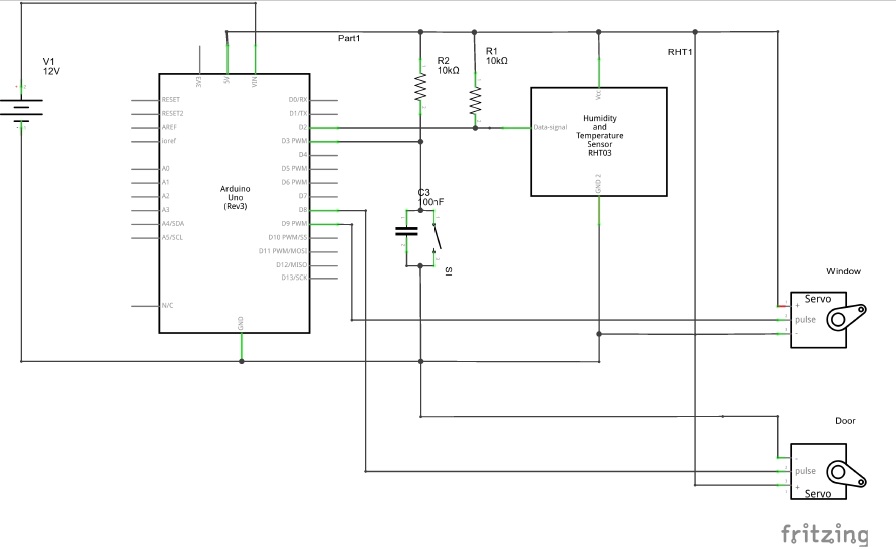
Flowchart
This is the flowchart of the scale model's controller. The flowchart shows how the program is working, what kind of conditions have to investigate and each reply show which is the next step.

7.3 Components
7.3.1 Constructional components
7.3.1.1 Beams
Using a wooden structure is conditioned by the knowledge of its mechanical properties.Thus the structural classification aims to offer us classes where wood will be sorted into homogenous batches of the same strength in order to optimize their use in construction. One method is to use machines by directly measuring the mechanical properties of wood, according to standard EN 14081-4, which automatically sort into mechanical classes defined by the EN 338 standard. The following table defines the usual class distribution of strength for the main types of wood used in construction:
| Type of wood | Timber Grade |
|---|---|
| Fir | C18 |
| Spruce | C24 |
| Douglas | C30 |
| Pine : sylvestre | C14 |
| Pine : maritime | C18 |
| Pine : black | C24 |
| Pine : Corsican | C30 |
| Larch | C18, C24, C27 |
| Oak | D18, D24, D30 |
| Symbol | Designation | Units | C14 | C16 | C18 | C20 | C24 | C27 | C30 | D18 | D24 | D30 |
|---|---|---|---|---|---|---|---|---|---|---|---|---|
| fm,k | Bending stress | N/mm2 | 14 | 16 | 18 | 20 | 24 | 27 | 30 | 18 | 24 | 30 |
| ft,0,k | Axial tensile stress | N/mm2 | 8 | 10 | 11 | 12 | 14 | 16 | 18 | 11 | 14 | 18 |
| ft,90,k | Transverse tensile stress | N/mm2 | 0.4 | 0.4 | 0.4 | 0.4 | 0.4 | 0.4 | 0.4 | 0.6 | 0.6 | 0.6 |
| fc,0,k | Axial stress | N/mm2 | 16 | 17 | 18 | 19 | 21 | 22 | 23 | 18 | 21 | 23 |
| fc,90,k | Transverse stress | N/mm2 | 2 | 2.2 | 2.2 | 2.3 | 2.5 | 2.6 | 2.7 | 7.5 | 7.8 | 8 |
| fv,k | Shear stress | N/mm2 | 3 | 3.2 | 3.4 | 3.6 | 4 | 4 | 4 | 3.4 | 4 | 4 |
| E0,mean | Medium modulus of axial elasticity | kN/mm2 | 7 | 8 | 9 | 9.5 | 11 | 11.5 | 12 | 9.5 | 10 | 11 |
| E90,mean | Medium modulus of transverse elasticity | kN/mm2 | 0.23 | 0.27 | 0.30 | 0.32 | 0.37 | 0.38 | 0.40 | 0.63 | 0.67 | 0.73 |
| Gmean | Medium modulus of shear stress | kN/mm2 | 0.44 | 0.50 | 0.56 | 0.59 | 0.69 | 0.72 | 0.75 | 0.59 | 0.62 | 0.69 |
| ρk | Characteristic density | kg/m3 | 290 | 310 | 320 | 330 | 350 | 370 | 380 | 475 | 485 | 530 |
| ρmean | Average density | kg/m3 | 350 | 370 | 380 | 390 | 420 | 450 | 460 | 570 | 580 | 640 |
| Components | Quantity | Price per unit (€) | Total price (€) |
|---|---|---|---|
| Steel for junction nodes | 12.3525 m² | 22.81 | 281.76 |
| Screws for junction nodes | 660 | 0.03 | 19.64 |
| Screws for panels | 495 | 0.01 | 6.97 |
| Double layered glass for windows | 27 | 39 | 1053 |
| Oak w/ dimension of 308 mm x 80 mm x 80mm | 82.5 | 46.67 | 3850 |
The reason we chose oak is because it is the most reliable and resistant outdoor wood, we want to ensure these chosen beams will stand the test of time. We stated in the environmental chapter the insulating benefits that oak provides and its acoustic advantages that can really benefit our dome. There are approximately 600 species of oak. For choose which one type of oak we going to use, we made a research about it. With the parameters of: geographic distribution, features, use and price. Finally we choose English oak [59], “Quercus robur” or Carvalho-roble in Portuguese. The wood is very resistant to insect and fungal attack because of its high tannin content.
- Geographic distribution: this type of oak tree is common in Europe concretely in Iberian Peninsula and Portugal. For this reason is a good choice for get on local suppliers. - Features: can be up to 45 meters high, it is a high quality wood, stiff and resistant to moisture. - Use: It is used in many ways since coming support hanged in Portugal in the Minho area through the furniture, barrels, shipbuilding, tools, crafts, building houses and even fuel.
This material is also affordable because the average price of a wooden oak beam with the dimensions presented below is approximately 47 euros. The dome is made of 165 beams but the columns are 290 mm x 80 x 80 so we have to buy only 83 columns and as such the final price of all the beams rounds up to approximately 4000 euros.
The dimensions for the beams are as follows:
- Red Beams = 1401 mm
- Orange Beams = 1372 mm
- Green Beams = 1185 mm
- Thickness of the beams = 80 mm
- Width of the beams = 80 mm
In the following figures we show the design of the dome made in Autodesk Inventor 2016. In Figure 45 we show the overall design of the dome with the door closed, we made the door in a different colour so that we can observe it easier. In Figure 46 we show the wooden beams in different colours so that the dimensions are easily recognized from the listed items shown above. In the last Figure 47 we show the dome without the wooden panels from above.


The dimensions of the windows are the following:
As you can see the windows have 2 sides with the dimension of 1175 mm as seen in Figure 48 and 50 and one side with the dimension of 1150 mm in Figure 49.


7.3.1.2 Connections
For the junction node, we designed a connection system. This can be seen in Figure 51 .The connector consists out of three parts, the top part which holds the beams made of a 3, 4 or 5 way junction, the middle part which is a pipe that connects the top part with the bottom and the bottom part which also supports the beams. The connections between the beams are made of stainless steel with a thickness of 3 mm. The connections were designed so that the wooden beams are well held in place with a strong and a cheap material in order to keep the price of the dome down while using high quality materials. The side panels are in a 12° angle and have 3 point screw holes so that the wood is held in place at the right angle and the bottom plate offers extra sturdiness which also helps holding the wooden beams in a lock. The screw holes are 12 mm (in diameter) by 30 mm (depth) which is enough to hold the 80 mm wide x 80 mm thick wooden beam.


The angles of the connections are the following:
- 3 way junction A - One 62° angle and one 124° angle.
- 3 way junction B - Same as “3 way junction A” but mirrored.
- 4 way junction A - Three 62° angles.
- 4 way junction B - Two 60.7° angles and one 58.7° angle.
- 5 way junction A - Two 55.7° angles and two 62.15° angles.
- 5 way junction B - Same as “5 way junction A” but mirrored.
- 6 way junction - All 6 angles are 62.15°.
In the figures below we show the angles between the sides and the top part of the junction Fig 55 and the angles between the base panel and the junction nodes in Fig 54.


7.3.1.3 Automatic window
In the proposal of our subject was mentioned that the dome should have an automatic window. In this chapter we will only describe the structural parts of the window. The motor will be discussed in the chapter “7.3.2 Electronic Components”. The dimensions of the window mentioned in this chapter are full scale. The view of the dimension of the beams inside which the window is constructed can be seen in Figure 56. This figure also shows the cutting lines that will be used in the following figures to explain the design of the automatic window.

The automatic window will be built at the inside of the triangle. The vertical positioning will be at the top of the beam. The reason for this is to prevent the accumulation of water inside the triangle and the maximization of the incidence of light.

Figure 57 shows the view at cutting line A-A. This line cuts through the beam at the base of the triangle where the hinges are situated. The hinges are indicated in pale blue in Figure 57. The hinges are connected onto a wooden support beam (dark blue) which supports the window and connects the moving part (red). The wooden support beam also creates a flat surface for the window to rest on, which will improve waterproofness. The moving part of the window consist out of three wooden parts. The biggest part is connected with the hinge. The other two parts fit around the glass (black) of the window and connect it to the moving window frame. All the wooden components are kept together by wood screws with a diameter of 5 mm. There are 2 different lengths that will be used. The screw that connects the fixed part of the window with the beams has a length of 80 mm, all the other screws have a length of 50 mm. The glass used in the window consists out of two layers of glass, the reason for this is that it will improve thermal insulation. Another advantage of is that the feeling of cold when passing close to the window, will be reduced as well.

Figure 58 shows the view along cutting line B-B, which show the point of the triangular window. At this end of the triangle the motor (black) is connected. The motor is connected to a support block (blue) that arises from the two support beams mentioned earlier coming together. The same goes for the moving part of the window.

Figure 59 shows the view at cutting line C-C, which gives at one of the two beams that don’t have hinges. In this view can be seen as well that the moving parts of the window in red rest on the support beam in blue.
7.3.1.4 Automatic door
Automatic door in the scale model
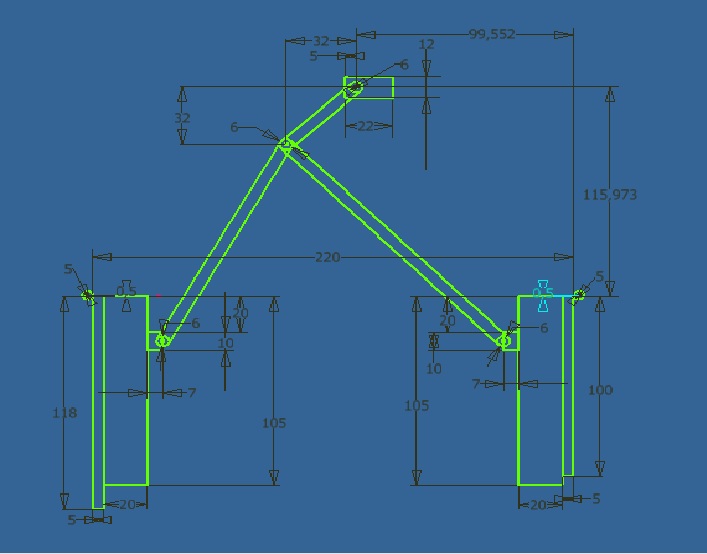
Figure 60 and 61 show the solution for the door in the scale model. We are going to use a double doors and we are going to use a servo motor to the opening. When the controller gets an opener signal, the servo is turning 90° and push out the door. When the controller get a closer signal the servo is turning 90° in the other way (back).

7.3.1.5 Panels
In this part, it presents the study of wood that it will use for the panels of the dome. For do it, it made an analysis of different possibilities for implement and after choose which one are the better for the using of product. First of all, it has a selection of potential woods with the respective study:
* Plywood
Plywood is an assemblage of wood veneers bonded together to produce a flat sheet. It offers all the inherent advantages of the parent wood plus enhanced properties in its laminated structure. Plywood would be used for panels, it suppose be indoor and outdoor, the panel shear of plywood is nearly double that of solid timber due its cross laminated structure. This makes plywood a highly effective material to use in gussets for portal frames, webs of fabricated beams and as bracing panels. Plywood can be used for structural, exterior, interior and marine. In this cause would be used in exterior application. A good comparison of all the information can be found in Table 13.
| Plywood | |
|---|---|
| Durability | The durability of plywood will in part depend on the bond quality used in manufacturing. Although the use of a durable adhesive provides a bond of long-term effectiveness. However, it may not be durable in exposed weather situations so must be preservative treated to ensure its full service life. |
| Treatments | A range of preservative treatments are available for plywood including CCA (copper chrome arsenate), LOSP (light organic solvent preservatives) and for veneers, Ruply and ACQ (Alkaline Copper Quaternary Compounds). In-ground applications can cause both decay conditions and termite attack. Correct preservative treatment against fungal attack (rot) is essential for all plywood that is to be permanently exposed to the weather, our case. |
| Engineering Considerations | - Curving plywood: plywood can be curved for use in ceilings and feature walls. - Acoustics and sound insulation: plywood is an excellent reflector of sound. A double‐sided plywood partition can reduce the noise levels by around 35 decibels. - Thermal properties: plywood, when used in timber construction, provides a low thermal mass, making it an effective material for use in tropical or subtropical climates. For cooler climates, the addition of insulation can provide an equivalent thermal insulation to solid construction. |
| Applications | Plywood has a big range of possibilities, giving us a good product to use in our dome. |
| Maintenance | Refer to supplier's specifications |
In Table 14 the characteristics of different species of wood are compared.
| Birch | Oak | Pine | Maple | |
|---|---|---|---|---|
| Hardness (kg) | 572 | 585 | 209 | 658 |
| Stiffness (MPa) | 13858 | 12548 | 8894 | 12617 |
| Compressive Strength (MPa) | 56 | 47 | 37 | 54 |
| Bending Strength (MPa) | 115 | 99 | 65 | 109 |
| Suppliers | Europe | Europe | Europe, Spain | Centre Europe |
| Density (kg/m3) | 640-670 | 670-760 | 500-540 | 610-680 |
| Price (€) | 12.00 | 9.00 | 6.00 | 12.00 |
Measurements specifications:
- Hardness is measured kilogram (kg).
- Stiffness is determined by applying a load to a beam until it deflects a certain degrees, and it’s measured in megapascal (MPa).
- Compressive Strength is calculated by loading a block of wood parallel to the grain until it breaks. It is measured in megapascal (MPa).
- Bending strength is calculated by loading a block perpendicular to the grain until it breaks. It is measured in megapascal (MPa).
In each case, the higher the number, the wood is stronger and with better features.
The prices are extracted of a Spanish supplier and the size of the plywood panels are approximately 250 cm long 25 cm breath and 0.6 mm thickness.
* Oriented Strand Board(OSB)
This product is principally used in North America, is a structural panel product produced by bonding together thin wood strands with adhesive. It has similar properties to plywood, yet is generally more cost-effective to produce and is also stronger than particleboard. OSB is produced with engineering studies for get a wood product with similar features like plywood and particleboard. OSB can be stronger but his have a less durability than plywood. Given that the wood dome is a permanent product, the durability is a very important aspect. OSB can be used for both indoor and outdoor applications. For compare better the information, it is all gathered in Table 15.
| Oriented Strand Board | |
|---|---|
| Durability | Depend on the bond quality used in manufacturing but less than plywood |
| Treatments | This material can be treated to protect against fungal or termite attack |
| Engineering Considerations | Not have the same appearance qualities as per plywood |
| Applications | Can be used as flooring, bracing or as a cladding under stucco, weatherboards, or other surface cladding |
| Maintenance | Refer to supplier's specifications |
| Sustainability | The production is of renewable species with fast growing. And utilize the maximum wood fibre for each log, having the less wastage from timber resources |
Connecting the panels to the beams
The problem with connecting the wooden panels to the beams is the fact that the beams are placed in an angle to get the round shape of the dome. For this reason, the beams or the panels will have to be cut at an angle. The team decided to cut the beams at an angle. In this way the panels can be put on top of the teams. The way this is done can be seen in Figure 62.

In this figure the blue parts are the plywood panels. These 20 mm thick panels are connected to the 80 by 80 mm beam using woodscrews with a length of 40 mm and a diameter 5 mm. The top of the beam is cut at an angle of 12° at both sides. The result is that a gap of 8.3 mm between the two plywood panels arises. This gap can be filled with waterproof insulation foam.
A second problem that arose, is the connection of the panels to the beams at the place where the junction nodes are connected. The steel of the junction node attached around the beam. For this problem, the team found a solution. At the end of each beam, a cut will be made at the top of the beam. This cut will be 136 mm long and will have a height of 13.5 mm. This can be seen in Figure 63

The reason for the height of 13.5 mm can be seen in Figure 64. With a width of 80 mm, the beam needs 10.5 mm of space. To this 10.5 mm another 3 mm should be added for the steel of the beam itself.

7.3.1.6 Foundation
Functions of the foundation
The foundation of the dome has a double function. The first function of the foundation is stability of the construction. For a traditional construction, the function of the foundation is to transfer the forces working on the construction to the ground. Most of these forces will work vertical. The wooden dome construction is no traditional construction. Wood is a light material compared to concrete or steel, so the weight of the structure is lower. The height of this construction is also limited. The main load working on the structure is the wind load. This will have as a consequence that the loads, working on the structure, are mainly horizontal or even upward.
The second function of the foundation is that it will be work as the floor panel of the dome. The floor protects the dome from water coming from the ground. To achieve this goal, the foundation needs a thickness of at least 250 mm of concrete. [60]
Materials and connection with the wood
The foundation is made out of concrete. The requirements of the concrete are not high. Since it has a thickness of 250 mm, the strength will not be a problem. But a net of steel reinforcement will have to be placed to prevent cracks at the surface of the concrete. The diameters of the bars can be as little as 8 mm, the space in between the bars can be 250 mm.
The wooden beams of the dome will have to be connected to the foundation. For this purpose, the team designed a special connection node. This can be seen in Figure 65.

This connection node consists of two parts. The first part is just a regular connection node, like all the others used in the dome, but with the only difference that it only connects 4 beams. The second part of the connection node is a ribbed steel bar. This bar is welded onto the rest of the connection in the workshop where the connection nodes are produced as well. The ribs on the bar will assure a good bonding with the concrete
Execution of the foundation
The foundation needs to be executed in the correct order, otherwise the connection between the wood and the concrete will not be made correctly. The first step is to dig out 250 mm of ground at the places where the foundation will come. This will make the dome easier to access, because the top of the foundation will be on the same level as the ground level around the dome.
The second step is to put a foil on the ground. This is to prevent the water inside the concrete from sinking into the soil while the concrete is hardening. This step is followed by the placing of the net of steel reinforcement bars. This nets needs to be placed on concrete distance holders of 60 mm.
The next step is to position the connection nodes in the correct place. The connection nodes can be connected to the net of steel reinforcement by welding or by a simple steel string. After the connection nodes are placed in the correct place, the concrete can be poured. During the pouring of the concrete, care should be taken that the connection nodes don’t move. The concrete also needs to be vibrated to assure the best possible compacting.
When the pouring of the concrete is completed, the position of the connection nodes needs to be checked again. If the position is still correct, the concrete should be left alone for at least 48 hours in order to let it harden. After those 48 hours, the rest of the dome can be constructed.
7.3.2 Electronic components
-Controller
We compared two controllers the Arduino Uno R3 and the Arduino Nano in Table 16. After the comparison we choose the Arduino Uno.
| controller | Arduino Uno R3 | Arduino Nano |
|---|---|---|
| Microcontroller | ATmega328 | ATmega328 |
| Operating Voltage | 5 V | 5 V |
| Input Voltage (recommended) | 7-12 V | 7-12 V |
| Input Voltage (limits) | 6-20 V | 6-20 V |
| Digital I/O Pins | 14 (of which 6 provide PWM output) | 14 (of which 6 provide PWM output) |
| Analog Input Pins | 6 | 8 |
| DC Current per I/O Pin | 40-50 mA (3.3 V) | 40 mA |
| Flash Memory | 32 kB | 32 kB |
| SRAM | 2 kB | 2 kB |
| EEPROM | 1 kB | 1 kB |
| Clock Speed | 16 MHz | 16 MHz |
| Cost | 17.39 € | 23.70 € |
-Temperature and humidity sensor
This kind of sensor is used for control the window operations. We compared two sensors in Table 17. After the comparison we chose the DHT22. We chose this sensor, because it has higher quality and the bigger reliability.
| temp & hum sensor | AM2302 DHT22 Temperature And Humidity Sensor Module | KY-015 DHT11 Temperature Humidity Sensor Module For Arduino |
|---|---|---|
| Operating voltage | 5 V | 5 V |
| Temperature range | -40-80 °C ± 0.5 °C | 0 - 50°C + / -2°C |
| Humidity | 20-90 % RH ± 2 % RH | 20 - 95 % RH + / -5 % |
| Cost | 9.82 € | 4.39 € |
-Distance sensor
More sensors are available on the market, but for the door opening solution in this project we need a distance sensor. If somebody comes close to the door the sensor detects it and send the opening signal to the controller. A comparison between two sensors was made in Table 18 . After the comparison we chose the HC-SR04.
| distance sensor | HC-SR04 - Ultrasonic sensor | URM37 V3.2 Ultrasonic Sensor |
|---|---|---|
| power supply | 5 V | 5 V |
| current | < 2 mA | < 20 mA |
| effectual angle | <15° | n.d. |
| ranging distance | 2 cm – 500 cm | 4 cm - 3 m |
| resolution | 0.3 cm | 1 cm |
| cost | 5.51 € | 13.50 € |
7.4 Functionalities
The dome should be equipped with functions as house because it will be used for a variety of purposes like a shelter, temporary house, leisure space, etc. Thus, it needs cooling/heating system as well as air refreshing and adjusting temperature system. Also, it must be able to provide itself with electricity for operating these systems. And then only, this product can be operated for many functions whenever we want.
7.4.1 Electric power supply / emergency generator
Generally, it’s possible that electricity can be provided from outside. it depends on place that the dome is set up, it will be provided through the wire. And, as a precaution about the emergency situations, we must have Plan B for continuous electric power supply. That’s why the dome should be prepared for small generator except for regular power supply from main sources. It is important to continuously supply electricity power because it can impact for all of systems. Apart from these, we can set the solar panel by using sustainable power. like the following image, our dome can be equipped with panels. In long-term perspective, It can be one of alternatives saving energy for dome.

7.4.2 Automatic door
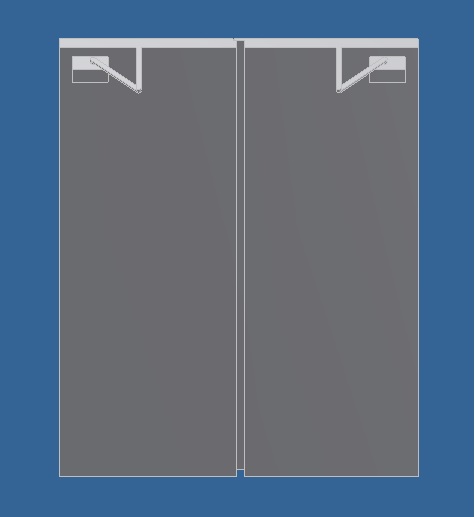
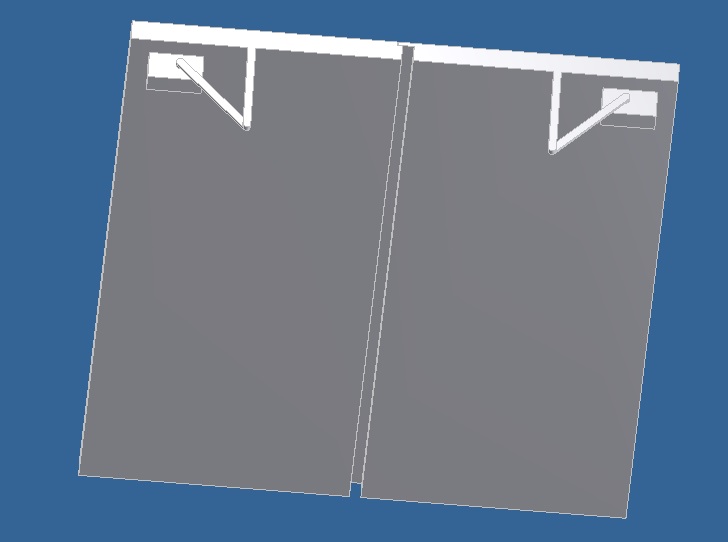
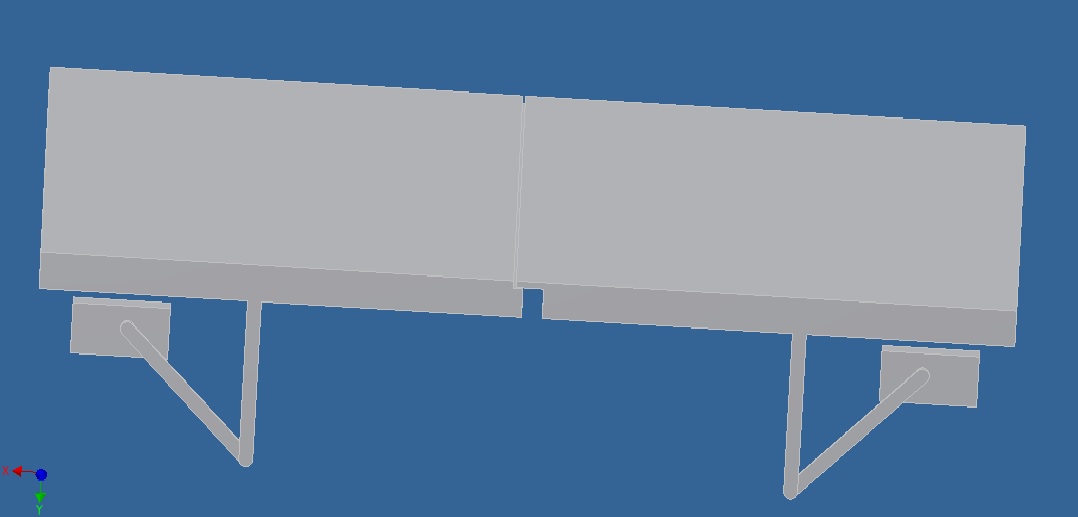
we try to make the door work automatically by using opener system. Plus, we will install the distance sensor for someone passing door. So, In case that the person want to go in and back, the door will enable him/her to access the entrance.
7.4.3 Automatic window
This automatic window has two functions refreshing the air inside dome, adjusting temperature of it. The sensors attached to side of dome work for setting the fixed value that user want by perceiving changed value higher/lower than it following the algorithm. It is automated by servo motor, this facilitates adjusting humidity and temperature of air in the dome by making air come in or out from outside. Also, it can be open whenever user want to refresh air in the dome.
7.5 Tests and Results
7.5.1 Design of the prototype
In this chapter, the design of the prototype will be discussed. The plan is to build one quarter of the dome in scale 1:6. This can be seen in the figure below. The dome will have a automatic door and window that will be functioning and be controlled by the Arduino. The design of the prototype can be seen in Figure 70

To build this part of the dome, the beams in table 19 are needed.
| Colour | Length [mm] | Number | Total length [mm] |
|---|---|---|---|
| Yellow | 396 | 2 | 792 |
| Orange | 229 | 25 | 5725 |
| Blue | 198 | 15 | 2970 |
| Magenta | 234 | 26 | 6084 |
| White | 226 | 4 | 904 |
| Total length of the beams [m] | 16,475 |
This beams will be obtained from a beam with the dimensions 21x44x2400 mm from Leroy Merlin. In total 7 of those beams will be needed for the construction of the scale model. The scale for the section of the beams is 1:3, the scale for the length of the beams is 1:6. This will make it easier to handle the beams, but the dome will look more robust.
Automatic door
Figure 71 shows the solution for the door in the scale model. We are going to use a double doors and we are going to use a servo motor to the opening. When the controller get an opener signal the servo is turning 90° and push out the door. When the controller get a closer signal the servo is turning 90° in the other way (back) and close the door. Figure 72 show the closed position.
Automatic window
The automatic window will be the same as the one that will be in the real size dome. In Figure 73 the size of the different beams of which the window consists can be seen.

For the opening of the window, a servo motor will be used. The positioning of the motor can be seen in the Figure 74 below.

Connections
For the connections in the scale model we will use aluminium that will be cut to the correct size and bend to the correct angles. For the connectors, aluminium sheets from the workshop at ISEP can be used. In the Figure 75, an example of a connection between beams can be seen.

List of materials
If all the parts of the scale model are put together we will need the following list of materials.
7.5.2 Simulation in PowerFrame
The calculations for the strength needed for the beams was done with the software called PowerFrame. This software is designed for the calculation of constructions that consist of beams.
As a first step the complete structure of the dome was imported. This could be done using the AutoCAD drawings that were made before starting from the icosahedron. PowerFrame allows the user to import the complete drawing or only a part of it. Once the geometry of the dome was imported, there were some characteristics that needed to be filled in. The first thing that needed to be done was to determine the boundary conditions of the beams. To do this, the points of support should be specified. The dome is design in such way that the nodes on the floor level can’t move. They will be able to pass on a moment of force. This characteristic is inserted in PowerFrame. The connection nodes between different beams will also be able to pass on a moment of force. To get this characteristic in PowerFrame, nothing needs to be done, because PowerFrame assumes that nodes can, if they can’t, it needs to be changed manually in the software.
The next step is defining the materials used for the beams. This is a characteristic that is not known before the calculations, but an assumption needs to be done in order to get a final result after an iterative process. For the first calculation the assumption was made that the beams have a section of 30 mm by 60 mm and the wood quality is C16.
The next step is defining the forces working on the dome structure. To get these, Eurocode 1 was used. This document by the European Union defines the forces working on construction under given circumstances.
The first force and most important force working on the dome structure is the wind load. For Portugal the mean wind speed at the coastal strip is valued 31 m/s. [62] This value is needed for the calculation of the basic wind pressure. This can be calculated with equation:
\begin{equation} q_{b} = 0.5 \cdot\rho\cdot v^{2}_{b} = 600.625 N/m^{2} \label{eq:basicwindpressure} \end{equation}
To get the peak wind pressure the value that was obtained in the equation needs to be multiplied by factor depending on the height of the building and the terrain class of the building. The height of the dome is known (3.4 m) , but the terrain class needs to be assumed. To get the worst case scenario of a dome close to the sea, without any trees covering it from the wind, the assumption was made of terrain class 0. Those two numbers combined in Figure 76 give a value of 2.5 for ce . If this value is multiplied by the value of 600.625 N/m², it can be concluded that the peak wind pressure will be 1.5 kN/m².

This peak value of the wind pressure is not going to work on the complete surface of the dome. If the wind is coming from the north for example, the south side of the dome is going to experience a negative pressure. Using Figure 77 the shape coefficient can be calculated. f/d is 0.5 in the case of our dome, h/d is 0. This gives a value of 0.8 for A or +Cpe,10 , a value of -1.2 for B or -Cpe,10 and a value of 0 for C.

If the peak value of the wind pressure is multiplied by the shape coefficients, the minimal and maximal values of the wind pressure are obtained. The minimal pressure will be -1.8 kN/m², this means that there will be a tensile force on the structure. The maximal pressure will be 1.2 kN² , this will be the compressive strength acting on the structure.
In the calculation, the assumption was made that the maximal tensile force would be working on the door of the dome, which is the weakest point of the structure because the beams are further apart.
Once the load is applied to the structure, PowerFrame will generate different combinations of the forces. In this combinations, the weight of the structure will be taken into account as well. A safety factor of 1.5 will be applied for the wind load and a factor of 1.35 will be applied to the weight of the structure. In the result page, the most critical combination of the forces will be showed. An example of the result of a simulation can be seen in Figure 78.

The simulation in PowerFrame will be executed for different wood qualities. For each quality, an optimization of the width and height of the section will be executed. This will help to decide which quality is the most suited to use in the actual dome. To make this decision, the prices of the wood will have to be taken into account as well.
During the process of optimization, certain principles were used. The first one was that the dimensions of the different beams will remain the same. This has as an advantage that it will help to avoid that mistakes occur during the assembly of the dome. The disadvantage is that only some of the beams will be used to their full resistance. The second principle used is that the section of the beams will only be varied with 5 mm, this will be decrease the calculation time for PowerFrame.
The calculations in PowerFrame gave the results for the different wood qualities that can be seen in Table 20.
| Wood quality | Width [mm] | Height [mm] | Resistance used [%] |
|---|---|---|---|
| C14 | 80 | 95 | 96.77 |
| C18 | 80 | 80 | 92.50 |
| C24 | 70 | 75 | 94.62 |
| C30 | 65 | 70 | 93.35 |
The results of this simulation need to combined with the information from the local retailers. These will only have wooden beams in certain dimensions. The beams with a dimension that approaches the section will have to be checked through a simulation as well.
7.5.3 Evaluation of the assembly process of the prototype
The first functional test on the prototype of the dome is building of the prototype itself. During this process, the team payed attention to way to improve the design and the assembly process of the dome in full size.
The first step was to cut the wooden beams to the correct length. This is the easiest part of assembling the dome. Before the cutting start, attention should be payed to marking the beams. Every beam needs to be marked before it was cut. The difference in length between some of the beams is as little as 29 mm in the real size domes. The marks should be clear for all the people working on the dome in order to avoid placing beams in the wrong place and losing time with measuring the length of the beams.
The second step in the building of the dome was making the junction nodes. In the prototype, the junction nodes were made out of an aluminium sheet with a thickness of 1 mm. This material was chosen because the limited thickness of the sheet and the characteristics of aluminium make it easy to bend it. All the angles in the junction nodes should be measured very precise. In this step, the marking of the junction node also needs to be done. In the junction node where all three different lengths of the beams come together, the shortest beam of 1185 mm should be enclosed by two angles of 56°. The four other angles in the junction node need to be 62°. For this reason, it needs to be marked clearly in which arm of the junction node the shorter beam is supposed to be placed.
Because of the fact that the junction nodes were produced manually, two limitations compared to the real size junction node occur. The first one is the decreased stiffness. The 1 mm thick aluminium plate has a lower stiffness compared to the 3 mm thick stainless steel that will be used in the real size dome. This is favourable for the handling of the material, but it has a negative impact on the strength of the connections. A second limitations of the manually made junction nodes is the decreased precision. If every junction node has a small deviation of the planned dimensions and angles, all this errors will add up and the last beams will be impossible to connect. This will solved in the full size dome by manufacturing them with computer operated machines to exclude all errors.
Once the structural components were finished, the prototype could be assembled. The team started the assembly at the bottom level at the two sides. In this way, four people could assemble simultaneously in teams of two. In order to work in multiple teams, the coordination and communication between the teams should be very clear. Every team has to know exactly which part they construct. This strategy can also be used in the construction of the full size dome. The only difference is the number of people in one team. In the real size dome the teams would have to consist of at least three and in an ideal case four people, especially during the construction of the higher parts of the dome.
After the structure was completed, the wooden panels that cover the dome could be placed. In the prototype, the panels had a thickness of 3 mm. This made it easy to bend them. The bending was needed, because the wooden beams were not cut to an angle at the top, as they will be in the real size dome. This was not possible with the equipment in the workshop and the scale of the prototype was too small to do this in a proper way, even with the right equipment.
The last step in the building of the prototype was the implementation of the automatic door and window. They can be fabricated completely before they are installed in the dome. This can be done by other people during the construction of the structure or by the same people if there is no need to finish the dome quickly. Important in the construction of the door and window is to check the real dimensions of the opening in between the beams before cutting the wood to the correct size.
7.5.4 Automatic window
The prototype has one automatic window. This window is situated at the top of the dome. For the construction of the window in the prototype a small change was made to the original design. The plan was to build the window with the same concept as in the real size dome. For this design, the beams inside had to be cut at an angle in order to assure the waterproofness of the window. This was not possible to do in the workshop, because the cutting machine could only cut angles at one side. Another problem was the scale of the model, which made it impossible to assure a waterproof window. This can be seen in Figure 79. For this reasons, the main goal of the prototype is to show how the window opens. The final result of the window can be seen in Figure 79.

The mechanical part of the window is almost exactly the same as in the design. The only small change is that a block of wood was used to connect the arm of the servomotor to the wood of the window. This was needed because the wood of the window was very small. This connection can be seen in Figure 80

The window was completely constructed and connected to the arm of the servomotor before it was placed in the dome. Once it was placed in the dome, the only thing that needed to be done was connecting the arm of the servomotor to the servomotor itself. The last step was to connect the servomotor to the Arduino to make it work automatically.
Once everything was connected, the window could be tested. The program for the Arduino was made in such way that the window opens when the temperature is higher than 27 °C. The team did test the opening and closing at the correct temperature of the window 10 times and all of the times the window did open and close correctly. For this reason, it can be concluded that the solution of the window works. The result of opening the window can be seen in Figure 81.

7.5.5 Automatic door
The prototype of the dome also had an automatic door. The objective of this door is mainly to show how the mechanism of the door works. The door doesn’t work with any sensor but with a simple push button. During the construction of the door, two changes had to be made to the original design to make the door work. The door in closed position can be seen in Figure 82.

The first change that needed to be made was the position of the arms connected to the servomotor. In the original design, the arms were connected as close as possible to the hinges of the door in order to make the door open 90°. During the first test of the opening of the door, the team found out that the servomotor that was being used, did not have enough power to open the door completely. For this reason, the team decided to move the point of connection of the arms closer to the middle. In this way, a bigger moment of force around the hinge of the door will be generated with the same force of the motor. The final connection points of the arms of the servomotor can be seen in Figure 83.

As a result of the changed position of the connection, the door cannot open 90°, as can be seen in Figure 84. In the real size dome, this problem will not be present, because the motor that will be used, will have enough power.

The second change that had to be made was for the positioning of the servomotor. To position the servomotor, a wooden block had to be connected to the beams of the structure. This can be seen in Figure 85.

After those two adjustments, the door could be tested. As for the window, the team tested the opening and closing of the door 10 times as well and all of the times worked correctly. For this reason the it can be concluded that the concept of the door works.
7.6 Conclusion
In this chapter, the development of the dome was discussed. The team worked together to design the dome. Once the design of the dome was completed, a decision could be made about which components should be used in the dome. Once those decisions were made, a prototype could be build. This prototype has a scale of 1:6 and has an automatic door and window. This prototype can be seen in Figure 86

The assembly of the prototype provided the team with a small improvements for the design and mode of assembly. Another part of the functional test was a simulation in PowerFrame. This simulation gave an optimized section of the beams of the structure and this section was used for the list of materials for the full size dome.
8. Conclusions
8.1 Discussion
This report gathers all our research about the development of a wooden dome shelter.
During the semester, we worked together on this project exploiting the diversity of our training and technical skills. The main priorities of the group were to find the best design for the Aslan dome in order to obtain a robust and wheatherproof structure but also to devise a sustainable and high-technological dome. In terms of marketing, we want to be perceived as a high quality and ecologically responsible brand. The team wants to sell the dome as a multifunctionnal alternative living environment with a small footprint.
Thus, to develop the Aslan dome, we did a study on existing products in order to select the characteristics suited to our project. After a lot of research, technical sketches and discussions, the team determined the design of the dome and realized a 3D model that was improved as and when the project progresses. At the same time, the group decided the components and the attributs of the product. So, we developed stainless steel connectors to strengthen the structure of the dome, making it more resistant. We also consider the foundation, indispensable to the dome sturdiness. We opted for a special connector in two parts maintained with concrete. Then, we selected the main materials. The team wishes the Aslan dome sustainable and environmentally friendly. Thus, we decided for using wood that is a good insulator and also soundproof. It helps to regulate the temperature and to reducing energy consumption. So, the dome is made with oak beams, an affordable and resistant wood and plywood panels. An other challenge was to apply modern technological know-how to the dome. The group designed automatic windows controlled by humidity and temperature sensors and an automatic door controlled by distance sensor. Finally, the team did some tests as such as simulation in PowerFrame or prototyping to confirm our choices of design and components and improve it if necessary. However, a real scale model with the real materials and with foundation has to be constructed to really determine the efficiency and the strength of the dome.
During this semester, we realized our project as a team, facing up to the budget and time constraints. It was difficult to manage these variables. Indeed, we exceeded the budget of € 22 and we didn't respect some deadlines because of a lack of time or by solving unexpected problems. However, this experience was an opportunity for each members of the group to develop knowledges, to collabore with people from different cultures and to lead a real project from A to Z. It was a challenge both culturally and academically.
8.2 Future Development
Concerning the future development, the team wants to keep in mind its initial objectives: design a high-quality and smart dome with ecological materials.
Thus, to assure the quality and the robustness of the Aslan dome, we plan to conduct tests in real conditions as wood aging, wind resistance or waterproofness. Furthermore, in order to improve the technological side and the user-friendliness of the product, we decide to give the possibility to the customer to adjust the sensors. For example, he could decide at what temperature he wants the opening of the windows. Besides, the group wants to implement an air conditionning to ensure the comfort of the consumer. Then, to meet the specific needs of our clientele, we will provide a possibility of customization. Thus, it will be possible for the customer to choose the size of the dome, the shape of the door or the number of windows. Additionally, the Aslan team plans to improve the interior design and especially the floor to provide a more comfortable and aesthetic product. Finally, in order to promote the autonomous and sustainable side of the product, the dome can be equipped with solar panels to use a more sustainable power and with the water pyramide designed by the team 5 to purify water from the sea and to provide drinkable water to our customers.